

I am following up my October 14, 2025 post about the Fall 2025 issue of Leader to Leader, where I am managing editor, with this post about our new Winter 2026 Issue 119.
As in the previous and earlier posts, I’ve included links to all of the articles, including two at the end, from our ‘From the Front Lines’ section based on our interviews with some of today’s most important researchers.
In this post I’m also pleased to present Leader to Leader’s new section, ‘Bright Future: Viewpoints From Tomorrow’s Leaders,’ which showcases the writing of young leaders, ages approximately 30 and younger. You will find thought-provoking pieces here from Ashley Lynn Priore, Andin Fosam, and Jenny Guan.
Changing the World One Interaction at a Time
Author/Columnist: Sarah McArthur
Article: “Bridging the Divide”
Sample quote:
Respect is not a job for one person alone. But one person can kick it off. As you can read about in veteran public relations executive and Leader to Leader contributor Robert Dilenschneider’s latest book, Respect: How to Change the World One Interaction at a Time.
As Bob describes throughout his book, respect is the bridge to connect humanity as we move into the future. And, as with the Verrazzano, respect is the strong foundation we need that we can move and change with the curvature of the earth, the change in season, and the progress of humanity.
Ours is a beautiful and bright future when regardless of our differences, we choose to build a bridge of respect that crosses the divides in our actions, communities, and institutions and leads us to a Bright Future for all.
How Power Operates Beneath the Surface
Author: Tiffany A. Archer
Article: “Reckoning with Power: Why Distance Matters in the Age of AI and Global Disruption”
Sample quote:
We often think of leadership as a question of clarity: articulate the vision, invest in good systems, build smart teams. But in this moment of accelerating complexity—where AI/Artificial Intelligence intersects with fractured trust and global volatility—clarity alone isn’t enough. Leaders must understand how power operates beneath the surface: how it’s signaled, challenged, and interpreted across borders and teams.
Enter the Power Distance Index (PDI), a cultural framework that holds powerful clues for leaders navigating ethical complexity and rapid change. Developed in the late 1970s by Dutch social psychologist Geert Hofstede, through a landmark study of IBM employees in more than 50 countries, the PDI is a numerical scale from 0 to 100 that measures how much less powerful members of a society accept and expect that power is distributed unequally. The higher the PDI score, the greater the acceptance of hierarchy and centralized authority; the lower the PDI score, the stronger the preference for equality and shared decision-making.
Careers as a Generative, Positive Part of Life
Author: Arthur C. Brooks
Article: “Leadership, Happiness, and Your Start-Up Life”
Sample quote:
Your life is the most important management task you will ever undertake. It is, in fact, like a start-up, where you are the founder, entrepreneur, and chief executive. And if you treat your life the way a great entrepreneur treats an exciting start-up enterprise, your life will be happier, more meaningful, and more successful than it otherwise would be.
This argument is anchored in my behavioral science background. It is also a core philosophy of my teaching at Harvard Business School, where instead of covering traditional businesslike subjects such as finance and accounting, I teach happiness from a scientific perspective. My classes cover a lot of neuroscience, social psychology, and behavioral economics to help my students build happier lives and understand how happiness science can serve them in their management careers. The focus of business school is one’s career, obviously, and upon graduation my students are almost all going to work long hours—and, indeed, generate prodigious worldly rewards like money, power, pleasure, fame, and prestige. So I focus a lot in my teaching about how their careers can be a generative, positive part of a happy, start-up life, and not something that harms it.
Each Leadership Capacity Has a Central Theme
Authors: Margaret Moore and Jeffrey Hull
Article: “Expanding Your Leadership Impact with Nine Science-Backed Capacities”
Sample quote:
Each of the nine leadership capacities has a central theme that is distinct from the other eight capacities. Researchers have shown each of these capacities to be effective, and they are effective in different ways. For example, one large study showed that servant leadership increases intrinsic motivation more than transformational leadership. Another study showed that transformational leadership improves individual performance more than authentic leadership, and authentic leadership improves certain measures of organizational performance more than transformational leadership.
Each capacity brings valuable impact on followers and organizations in their own ways, which means it’s wise to dial up one of more capacities that are important to the task at hand. Sometimes the situation calls for more objectivity, or more agility, or more service, or more positivity, etc.
Applying the “Experience Dividend”
Author: Dan Pontefract
Article: “Careers in the Age of Demographic Upheaval”
Sample quote:
Organizational leaders will inevitably and eventually need to navigate a longer runway of contribution, a smaller inflow of new talent, and structural resistance to recognizing age as an asset, whether people are young, middle-aged, or older. If leaders are not prepared, the result will not be chaos, but a slow-moving erosion of performance and growth.
And no, AI (or automation) is not the sole answer to this behemoth and prickly predicament.
The scenario I outlined above is what I refer to as “Age Debt.” While there is a solution to this invisible, calamitous, and inevitable crisis—I call it the “Experience Dividend”—it is time for leaders to take the very real problem of Age Debt seriously.
A Profound Shift in Employee Expectations
Author: Alaina Love
Article: “The New Search for Meaning at Work”
Sample quote:
Over the last five years, I’ve observed a profound shift in employee expectations of their work experience, perhaps because the potential of contracting a deadly infection deepened our awareness of the value we place on our lives and the time we have left to live it. As evidenced in a 2024 American Psychological Association Trends Report, there is a strong desire among employees for meaning, with 93% of respondents reporting it is very or somewhat important to them to have a job where the work has meaning. These data highlight the new demands on leaders that I’m witnessing in my own practice. My leadership clients have had to expand their own self-awareness and learn new culture-building skills to create environments where meaning and purpose can be experienced by everyone. A person’s emotional well-being, including their search for meaning (which was once a private consideration), is now a shared responsibility between leader and employee.
The Ability to Embrace and Direct Change
Author: Phil Gilbert
Article: “Leading Change Is Hard. Here’s My Formula for Success.”
Sample quote:
The present is far more fragile than we often realize. Technology is an ever-present disruptor that has a way of commoditizing what once felt unique, driving a kind of Moore’s law-like acceleration into every corner of our daily workflows. Accepting this reality opens the door to a powerful truth: market leadership tomorrow will be determined by your ability to embrace and direct change today.
Change is inevitable—that much is clear. But what sets great organizations apart is the intentionality and speed with which they navigate change. Contentment with the way you work in the present is a setup for disaster in the future. A much healthier approach was once expressed to me this way: “We must always look at the status quo with disdain.”
Communication Means Everything
Author: Kelvin Johnson
Article: “Direction, Momentum, Control: Lessons From My Leadership Journey”
Sample quote:
We live in a world of constant notifications. And not just the ones on your phone. Every book, app, article, and post is vying for your attention. It’s exhausting. Our already-fragile attention spans have nearly vanished, and people are more burned out and time-starved than ever. After years in the startup ecosystem, especially in sales and operations, I realized communication means everything. But it’s a deeply undervalued skill and one that’s only becoming increasingly difficult to master, with goalposts moving at the speed of sound. However technology comes to evolve, people will always respond based on emotion, and it’s impossible to predict how something will land. At any given moment, you only get so much of someone’s attention.
There’s no shortage of ideas, but most of them don’t see the light of day for a spate of reasons: potential investors don’t have the time or bandwidth; the marketplace is already oversaturated; it takes money to make money; the list goes on. Legions of would-be founders develop bulletproof concepts that the public will never hear about. In short, the startup system is stacked against people who want to bring their ideas into the world.
Unlocking and Expanding Human Potential
Author: Margaret C. Andrews
Article: “What Self-Understanding Is and Why It’s Essential for Leaders”
Sample quote:
Your differences are what allow you to lead differently than others. The best way for each of us to lead is from our clarity about who we are and what we want to do with our time on Earth. You are different from others, and that is a good thing. Appreciating that we are different from others helps us make decisions that are right for us, as opposed to those that sound right from society’s perspective or anyone else’s. It helps us choose our behaviors and actions more carefully on our way to becoming the leader we want to be. It is from understanding ourselves that we gain clarity about who we are and who we want to become. From this clarity we gain the courage to become the person, and leader, we want to be.
When we understand ourselves, we can manage ourselves toward becoming the leader we want to become, the leader only we can be. And when we don’t understand ourselves, we can’t do this because we can’t manage what we don’t understand. In addition, when we don’t understand ourselves, it’s difficult to understand others, and this makes it more difficult to motivate them toward a common goal and develop them toward the leader only they can become. This is a waste of human potential. Powerful, effective leadership does the opposite—it unlocks and expands human potential in ourselves and others, and it begins with understanding ourselves.
The Energy That Uplifts and Connects
Author: Moshe Engelberg
Article: “Love-Powered Leadership: A Proven Approach for Transformative Organizational Success”
Sample quote:
What if love was not just a virtue but a business strategy? Imagine leadership fueled by the energy that uplifts and connects people—delivering not only meaning but measurable success. In today’s complex and volatile business landscape, leaders are challenged not only to perform but also to transform. They must meet the growing demands for ethical practices, social responsibility, and stakeholder engagement while delivering strong financial results.
One powerful and proven path is love-powered leadership: leading with love—defined simply as the energy that uplifts and connects. It’s a philosophy that addresses today’s leadership challenges by elevating both human and business outcomes. Love-powered leadership builds cultures of trust, fosters authentic relationships, and helps organizations adapt and thrive in the face of rapid change.
Embrace Diverse Viewpoints and Learn From Anyone
Authors: Eileen Dowse and Eddie Turner
Article: “Team Coaching vs. Facilitation: What Is the Difference and Why Does It Matter for Today’s Leaders?”
Sample quote:
A mindset essential for effective collaboration in organizations is the willingness to embrace diverse viewpoints and learn from anyone, regardless of their role or background. This approach is rooted in the belief that involving those directly engaged with the work leads to more informed and successful problem-solving than relying solely on the expertise of a single individual.
Collaborative approaches like team coaching and facilitation are rapidly becoming mainstream staples in organizations. These methods offer a mutually beneficial way to build relationships, develop individuals, and achieve results. In our experience as facilitators and team coaches for several of the world’s largest organizations, we have observed both the challenges and rewards of effective collaboration on performance. A team coach or facilitator can help foster dialogue and create an environment committed to sustainability among individuals.
Energy Waiting to be Harnessed
Author: Rebecca Heiss
Article: “Leading Through the Springboard: Why Great Leaders Don’t Eliminate Stress—They Harness It”
Sample quote:
The leadership development industry has spent billions promoting stress-reduction techniques. But our research in 2024 found that over 58 percent of Americans stress out even more trying to control their stress—a phenomenon I call the “wellness trap.” Leaders are particularly susceptible to this because they feel pressure to appear composed and in control at all times.
But here’s what the data reveals: Stress management outcomes of 90 various workplace wellness programs (think breathing techniques, meditation, massage, etc.) across over 46,000 individuals found these programs had no positive effect. In fact, these data published in 2024 in the Industrial Relations Journal found that many of the trainings around stress management often made matters worse.
The problem isn’t stress itself—it’s our relationship with it. Trying to fight against stress only leads us to feel like we’re broken, incapable, or fundamentally flawed—when the truth is that stress is simply energy waiting to be harnessed.
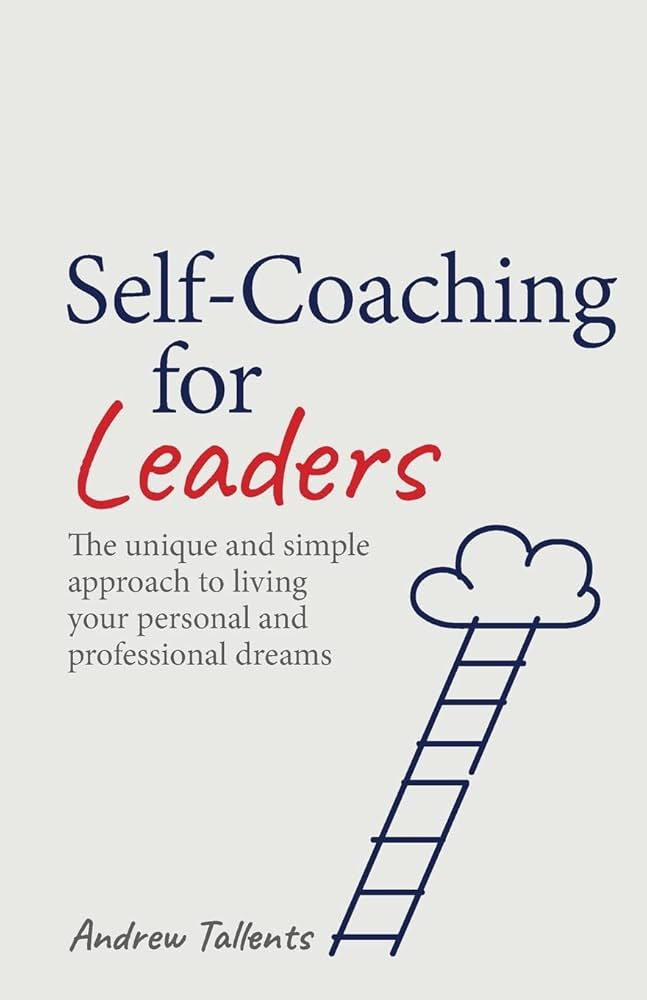
Conscious Self-Inquiry and Intentional Practice
Author: Andrew Tallents
Article: “Leadership’s Hidden Curriculum: How Childhood Shapes Self-Agency at the Top”
Sample quote:
When we reconnect with who we truly are, we create space to ask ourselves what really matters. This is the heart of the Refocus stage. And it demands more than efficiency hacks or clever prioritization matrices. It asks us to confront what we believe about success, about worth, and about a sense of what or how much is “enough.”
Refocusing means making conscious choices. In my own life, I had to learn to let go of certain measures of success that were keeping me stuck in performance mode.
Many of the leaders I’ve worked with describe a profound shift when they began seeing these patterns not as flaws, but as part of a story they now have the power to rewrite through conscious self-inquiry and intentional practice. That’s the essence of this work—not to erase the past, but to engage with it with clarity and compassion.
Identifying Five Core Challenges to Growth
Authors: Andrés T. Tapia and Michel Buffet
Article: “Your Organization’s Greatest Asset to Generate Growth: Breakthrough Teams”
Sample quote:
In our global consulting work at Korn Ferry, leaders from a wide range of sectors—including business, government, nonprofits, academia, and the military—consistently identify five core challenges to growth: breaking down organizational silos, developing and retaining talent, fostering innovation, improving decision-making, and optimizing operations. These challenges transcend industry boundaries and are relevant to any organization striving to adapt, evolve, and lead effectively in a complex world. Each discipline plays a crucial role in creating an environment where all team members feel valued and empowered but all five put into action synergistically unlocks breakthrough performance across all five of these business challenges.
Aligned, Adaptive, and Moving Forward with Purpose
Authors: Geoff Tuff and Steven Goldbach
Article: “Design, Align, Hone: The CEO’s Real Job”
Sample quote:
Management systems are one of the most overlooked—but most powerful—tools leaders have to shape behavior and drive meaningful change within an organization. Broadly defined, they include everything managers use to influence how work gets done: performance reviews, HR/Human Resources processes, budgeting structures, meeting rhythms, incentive systems, and informal norms. Though grounded in a business context, these ideas hold relevance wherever groups aim to align people and actions toward a common goal.
While these tools may seem mundane or operational, they are the levers that determine whether a strategy lives or dies. Too often, leaders treat them as back-office mechanics—important, but not strategic. Strategy sessions are held, visions are cast, and then the leaders’ attention shifts elsewhere, with only sporadic check-ins on performance. But when management systems are ignored, organizations drift. When they’re intentionally designed and actively managed, they become the invisible engine that keeps a company aligned, adaptive, and moving forward with purpose. Keeping management systems designed for needed purposes avoids the need for drastic change, which is commonly referred to as transformation (or, as we can now call it, the attempted overhaul of many, many management systems at the same time with the hope that the design works seamlessly).
Resist the Urge to Rush to Judgment
Author: Johanna Hoyos
Article: “Leading with Eyes Wide Open”
Sample quote:
Empathy isn’t sympathy. It’s not even an agreement. It’s the willingness to look again. To let someone else’s reality change your own, even slightly.
When we see someone experiencing homelessness, we might make quick assumptions: addiction, laziness, mental illness. But do we also think: trauma, displacement, medical bills, caregiving burnout? And how often do we apply the same snap judgments at work?
To lead well is to look again. To give people more than a single glance or story. To ask ourselves: what don’t I know?
Emotional intelligence requires both empathy and cognitive flexibility. Great leaders resist the urge to rush to judgment. Instead, they ask: What if I’m wrong? What more is there here that I don’t yet understand?
Bright Future: Viewpoints from Tomorrow’s Leaders
A Framework For Leadership and Personal Agency
Author: Ashley Lynn Priore
Sample quote:
I founded Queens Gambit when I was 14 because I believed chess could be a framework for leadership and personal agency. Today, Queens Gambit is a national, youth-led nonprofit reaching over 2,000 students annually, many from communities historically excluded from opportunities to lead.
What makes Queens Gambit unique isn’t just its programs; it’s how we’re structured. Young people lead at every level. Our board includes youth under 25 with voting rights, and our programs are co-designed by the very students we serve.
This model hasn’t come without criticism. Some foundations have argued that empowering young instructors creates “more work” for adult program providers, even going so far as to suggest they’d need to “babysit” them.
That couldn’t be further from the truth.
Envisioning Fresh Applications to Existing Skills
Author: Andin Fosam
Article: “Building Systems for Excellence: Notes From the Ongoing Pursuit of High Achievement”
Sample quote:
It’s not uncommon to be intimidated by new experiences. I’ve admittedly decided to forgo several opportunities, doubting my experience and authority. I would play it safe, limiting my goals to the familiar, not recognizing the versatility of my strengths.
Taking stock of your skills is an exercise in envisioning fresh applications to existing skills while remaining genuine. For instance, my study of the philosophy of science has built my affinity for languages. During the Hesselbein Global Leadership Academy for Student Leadership and Civic Engagement at Pitt in 2017, Frances Hesselbein encouraged me to share the impact of my Girl Scout Gold Award, akin to the Boy Scout Eagle Award, liberally. I actualize this as a community leader who fervently advocates for health literacy.
Empower Others to be Seen, Heard, and Recognized
Author: Jenny Guan
Article: “Servant Leadership: From Self to Others: A Cycle of Aesthetic Service”
Sample quote:
Two years ago, I landed at Purdue University in the American Midwest, far away from the familiar home on the other side of the globe. Purdue didn’t greet me with the dazzling skyscrapers of New York, but with an endless ocean of green cornfields. The rural landscape surrounding Purdue has even earned it the nickname “the university in the cornfields.” As a freshman, I found everyone around me unfamiliar. I also knew that all the other 8,000 new students had left behind their families and friends to come to this unfamiliar environment. To be seen, to be heard, and to be recognized became a shared psychological longing for each of us.
Through a fortuitous connection, I co-founded LEO on LinkedIn with Timothy E. Sander, Executive Vice President/EVP & Chief Ethics and Compliance Officer/CECO at Sumitomo Corporation of Americas and the originator of “Thankful Stewardship.” LEO’s mission is to foster servant leadership globally, and its vision is to empower others to be seen, heard, and recognized. I founded LEO because, without student participation, leadership development is incomplete—after all, they are the ones who will step into leadership roles over the next 20 years and bring people-first values to workplaces and communities. Their stories will carry the power to inspire others and shape the future. Therefore, LEO’s mission is to foster servant leadership globally, and its vision is to empower others to be seen, heard, and recognized.
From the Front Lines
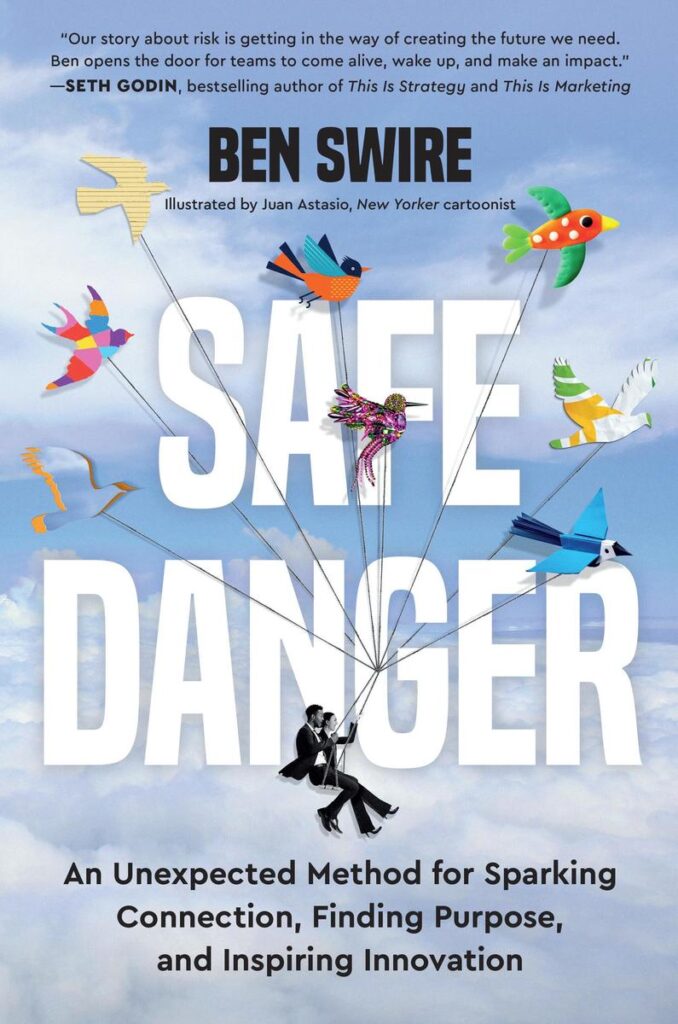
The Outcomes We Want Require Us to Take Risks
Article: “How Teams and Individuals Can Become More Innovative by Implementing “Safe Danger”
Sample quote from Ben Swire, former designer, writer, and former Design Lead at IDEO; later co-founder of Make Believe Works:
Safe Danger is built on a paradox: we long for safety, but we only come alive when we risk leaving safety behind. The outcomes we want most at work—belonging, purpose, creativity, trust—don’t come from staying comfortable. They require us to take risks – risks many of us are deeply uncomfortable with. The book blends psychology, design, and lived experiments to show how small, playful risks—sharing something personal, stepping into the unfamiliar, or courting failure—build the emotional reflexes we need for when the real challenges arrive. Instead of the mini-golf, balloon-tower “team building” activities that so many people dread, it offers a set of experiences that feel meaningful in the moment and transformative afterward.
The Danger of Adopting an “Either/Or” Mindset
Article: “Integrating Exclusive and Inclusive Approaches to Talent Management”
Sample quote from Edward P. O’Connor (Professor, School of Business, Maynooth University, Maynooth, Ireland):
This article addresses a fundamental and practical issue in corporate TM strategy: many organizations tend to adopt an “either/or” mindset. They feel compelled to choose between two opposing strategies: focusing their resources and attention exclusively on a small group of high-potential, critical employees (an “exclusive” approach) or concentrating on developing the talents and capabilities of the entire workforce (an “inclusive” approach). Each strategy comes with significant drawbacks. The exclusive approach can demotivate the majority of employees, leading to disengagement and other negative consequences. On the other hand, the inclusive approach can dilute resources and fail to recognize and reward the superior contributions of high-performing employees adequately.