
This post, about the new Summer 2025 issue of Leader to Leader, where I am managing editor, is a follow-up to my May 13, 2025 post about our Spring 2025 issue.
As in the previous and earlier posts, I’ve included links to all of the articles, including two at the end, from our ‘From the Front Lines’ section based on our interviews with some of today’s most important researchers.
Also, be sure to read our latest virtual issue, on ‘Leadership and Trust,’ which is free to read for a limited time. And we are excited about our forthcoming new section, ‘Bright Future,’ which will showcase the writing of young leaders, ages approximately 30 and younger.
Creating a Culture of Respect, Openness, and Trust
Author/Columnist: Sarah McArthur
Article: “Harnessing the Power of Inclusion”
Sample quote:
You may have heard of the 777 or taken a flight on one of these airplanes, but what you may not know is that the 777 is the first digitally designed and digitally premanufactured commercial jet. Not only that, but it is the long-range pioneer and largest twin jet airplane, designed as such so as to replace three- and four-engine jets and thus continue progress toward more environmentally sustainable airplanes.
Far from top-down, command and control leadership and telling everyone what to do, the bold leaders of the 777 led with humility, love, and service; coaching and facilitating all of the stakeholders. They created a culture of respect, openness, and trust in which everyone knew the vision, strategy, and plan; as well as their role, responsibilities, and importance of their contribution. As a result, the 777, this incredible feat of invention and design, was created because of, not in spite of, a focus on inclusion, on working together.
Continuous Improvement and Organizational Resilience
Author: Angela Jackson
Article: “Centering Employee Voices: A Transformative Approach to Leadership and Strategy”
Sample quote:
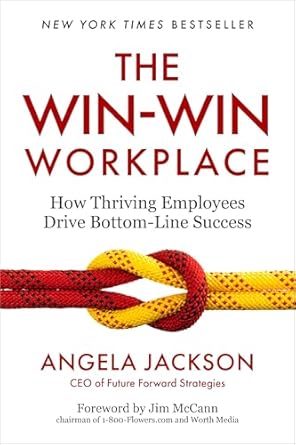
Research underscores the value of engaging employees at a strategic level. In my study of 355 Fortune 500 companies, which is more fully detailed in my recent book, The Win-Win Workplace: How Thriving Employees Drive Bottom-Line Success (Berrett-Koehler, 2025), I found that organizations prioritizing worker feedback experience a 44-percent increase in profitability and a 39-percent boost in asset valuation. These findings align with studies like Harvard Business School professor Amy Edmondson’s groundbreaking work on psychological safety, which emphasizes the role of open dialogue in fostering innovation and adaptability. Edmondson’s research highlights how creating an environment where employees feel safe to voice their ideas can drive continuous improvement and organizational resilience.
Similarly, Frederick Miller and Judith Katz, in their 2025 book The Power of Agency: Cultivating Autonomy, Authority, and Leadership in Every Role, argue that empowering employees at all levels generates a ripple effect of ownership and accountability. Their work demonstrates how aligning individual agency with organizational goals fosters innovation and ensures sustained success.
Collectively Influencing Judgment and Human Flourishing
Authors: Mary Crossan, Bill Furlong, and Corey Crossan
Article: “Diagnosing and Strategically Implementing a Character-Based Culture”
Sample quote:
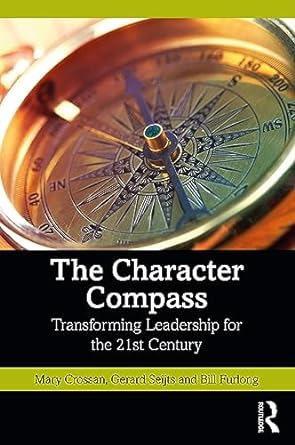
We rely on the definition of character proposed by Crossan and colleagues in “Developing Leader Character: Finding a Way Forward,” their 2024 Academy of Management Learning and Education article, as “an interconnected suite of embodied and virtuous habits. These habits are virtuous insofar as they collectively influence judgment and human flourishing. The dimensions of character can be observed, assessed, and developed. Character is universal yet reflexive to context and can manifest toward deficient or excess vices when high levels of one dimension are not supported by high levels of other dimensions.”
Character has often been relegated to ethics and morals, with little regard for its critical role in decision-making and performance. There is a misconception of a trade-off between character and results. Research from the Ivey Business School, published in a 2023 Amplify article, reveals that moving from weak to strong character yields a 14% increase in leader effectiveness, an 18% increase in employee voice, a 16% increase in psychological safety, and a 10% improvement in each of leader resilience, job satisfaction, and job-related well-being. Moving any of these metrics is immensely difficult, but because character is so foundational, it influences all facets of the organization, including culture.
Something to be Shared By All of Humanity
Authors: Sarah McArthur, Alan Mulally, Dan Dornseif, Michael Lombardi, Peter M. Morton, Lars Andersen, Ron Ostrowski, John Roundhill
Article: “People “Working Together”© to Produce the Preferred Boeing 777 Airplane Family”
Sample quote:
Art and flight are two of the greatest accomplishments of humanity, and in many ways, the creation of the 777 and the pursuit of perfection are not unlike Michelangelo painting the Sistine Chapel. Both are beautiful works of art that challenged the minds and skills and passions of their creators, and both are inspired by our connection to something greater than ourselves.
In that context, those who put their heart and souls into creating the 777 were giving life to something magnificent, something to be shared by all of humanity. The 777 provided the efficiency of a two-engine airplane in what was previously a three and four-engine domain, harvested available technologies that were ready to serve humanity, and applied Our “Working Together” team processes executed in a “culture of love by design” that embodied values espoused by Peter Drucker and Frances Hesselbein. In its simplicity, it answered the human need to apply oneself with love to a masterpiece that, in retrospect, is viewed by its creators as the seminal accomplishment of their professional lives.
The Leader Amplification Effect
Authors: Adam Galinsky and Chloe Levin
Article: “Inspiring Leaders Aren’t Born, They’re Made”
Sample quote:
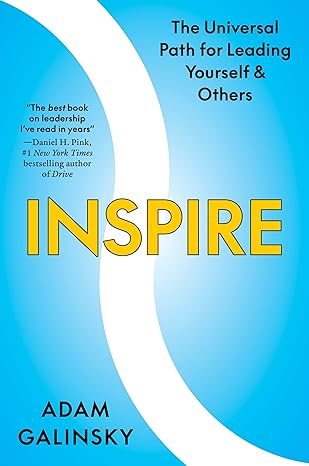
One of the main drivers of the Leader Amplification Effect is the simple fact that leaders attract attention. Shakespeare’s famous phrase, “all the world’s a stage,” is especially true for leaders. When you are a leader, you are constantly on stage. That means those around you are attending to your every move, listening intently to your every word, studiously interpreting your every expression, analyzing your every interaction.
Our words, expressions, and behaviors generally send signals of meaning and intention. But attention amplifies those signals, making them louder, bolder, and stronger. Attention turns hope into HOPE and fear into FEAR. For those on the receiving end, constructive suggestions feel like humiliating criticism when it comes from a leader, especially in public.
The Power of Sponsorship
Author: Jovina Ang
Article: “The Four Paths for Advancing Women on Corporate Boards”
Sample quote:
Sponsorship occurs when there is a more powerful and influential leader who is willing to invest and spend their political capital for a younger talented leader to progress ahead. It has been proven to be the career booster and accelerant for every leader, whether man or woman, to get ahead, especially on boards. In promoting and advocating for the younger talented leader including influencing other powerful leaders to bet on them, they become the face in the crowd instead of one of the faces in the crowd.
Without sponsorship, organizations tend to shy away from appointing leaders to key roles because the risks of failure are higher for jobs at the top. There is also increased competition and far fewer jobs at the top. As one sponsor aptly described to me: “A top performer looks and performs like another top performer. Even though you are good at what you do, you’ve got to have the backing of a powerful and influential leader who is willing to vouch for and stand up for you so that you shine among others.”

Attributing Human Qualities to Non-Human Objects
Author: Nada R. Sanders
Article: “Three Principles For Leaders In The Age of AI”
Sample quote:
Despite all the hype, AI is not magic. AI is just another tool rooted in statistical modeling. The greatest boost to these models was the development of the generative large language model (LLM) interface that came out with ChatGPT and was then followed by other models. This enabled the evolving technology to take on an intelligent sounding authoritative voice. As humans, we have a significant tendency to anthropomorphize, attributing human qualities to non-human objects. The authoritative voice of the algorithms embedded in generative AI models has significantly contributed to the belief of their higher intelligence. However, AI is indeed the proverbial “stochastic parrot.” The model probabilistically generates word sequences without knowing what it is saying. AI does not actually know what chocolate tastes like; it can’t feel the dreaminess of looking at clouds; it doesn’t understand the look of fatigue in a colleague’s eyes.

Polarization Drives Entrenchment
Author: Yabome Gilpin-Jackson
Article: “Dialectical Leadership: New Leadership Calling in an Era of Polycrises”
Sample quote:
The challenges of these times are steeped in polarization, particularly political polarization, the complex process through which people hold strong moral and ideological worldviews that frame their positions on social and political matters. Polarization drives entrenchment, such that people become overconfident in their positions, intolerant of those holding differing worldviews and susceptible to confirmatory bias to reinforce their beliefs.
This confirmatory bias happens both individually and at group levels, where evidence is consistently sought within groups of the same ideological views to confirm rather than adapt/expand thinking when contradictory evidence is presented. In our digital, social media, and artificial intelligence age, we see the rise of misinformation (false information/getting the facts wrong) and disinformation (deliberately spreading false/misleading information) and echo chambers reinforcing polarized views and making people and groups even further resistant to openness and change.
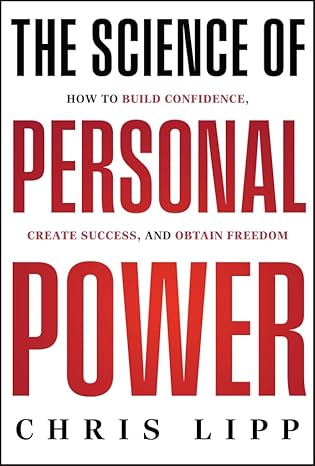
The Belief in Our Own Capability to Create Impact
Author: Chris Lipp
Article: “Leading With Personal Power: Gaining Respect Through Courage, Vision, and Trust”
Sample quote:
Personal power is our belief in our own capability to create impact. Unlike formal power, which focuses on external qualities like authority and resource control, personal power is an internal psychological state that radiates outward to influence those around us. Similar to confidence, personal power shapes how we carry ourselves. But unlike confidence, which is primarily an internal sense of self-assurance, personal power carries an inherent force that shifts dynamics and commands attention even without formal authority.
According to a 2013 study in the Journal of Experimental and Social Psychology, when individuals tapped into their personal power prior to entering an interview, they were 81 percent more likely to succeed. Radiating personal power nearly doubled their chances of being accepted.
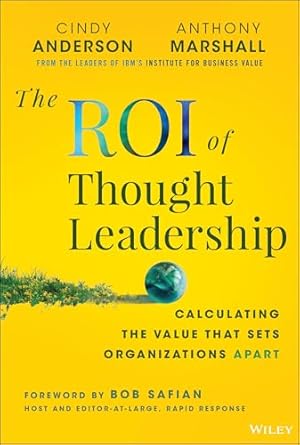
Making Sense of the Unknown
Authors: Cindy W. Anderson and Anthony Marshall
Article: “Thought Leadership: Maximizing impact through Distinctive Voice and Authoritative Points of View”
Sample quote:
Thought leadership has long been produced by the world’s largest strategy consultancies as a way to demonstrate authority and expertise with their clients. McKinsey & Company, nearly a century old, has been publishing its McKinsey Quarterly since 1964. That’s because thought leadership is seen as a critical tool that helps executives looking to make sense of the unknown—emergent business forces and technologies, volatility and disruption. Thought leadership fills the gap between what their own organizations can provide and what they need to make considered and reasoned business decisions. We see it in the numbers. Eighty-eight percent of global and 74% US-based executives say they use thought leadership to compensate for inadequate data and analysis available from their own organizations.
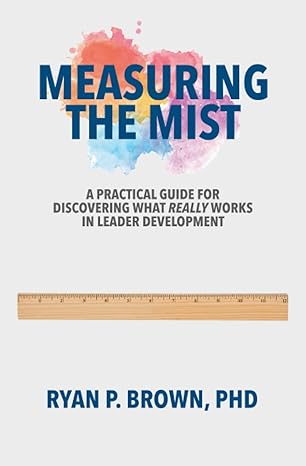
Creating a Unique, Communal Environment for Learning to Take Place
Authors; Aaron L. Pomerantz and Ryan P. Brown
Article: “Future Leaders or Fortunate Elites? Rethinking Leader Development in Higher Education and Beyond”
Sample quote:
As a society, we need to have a conversation about how we define leadership and leader development. Higher education is just the place to begin such a conversation. In the information age, there’s no way for academia to compete with resources like Khan Academy, GitHub, or even Wikipedia when it comes to efficiently communicating knowledge. However, higher ed has always been about more than just about what people learn. Instead, higher education is about creating a unique, communal environment for learning to take place, one that exposes people to different points of view and different perspectives and that challenges them to grow and develop, not simply to absorb information efficiently.
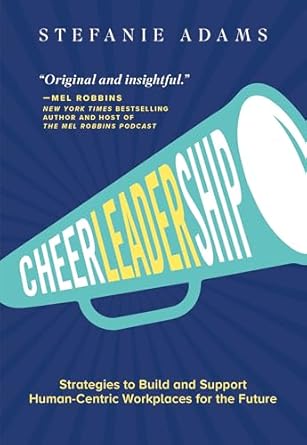
Practical Strategies for Creating a Collaborative Environment
Author: Stefanie Adams
Article: “Leading Across Generations in the Workplace: Promoting Collaboration, Inclusivity, and Respect”
Sample quote:
Each generation brings with it a distinctive set of experiences, values, and expectations that influence their approach to work, communication, and interaction with colleagues. The multigenerational workplace can be a source of innovation and creativity. However, in my experience, I have seen that more often than not, it can lead to misunderstandings, communication gaps, and conflict if not managed effectively. As leaders, understanding what makes someone the way they are, and the intricacies of generational differences is paramount to fostering an inclusive environment and culture of belonging for all employees.
To address the challenges and opportunities presented by a multigenerational workforce, this article provides a high-level summary of the different characteristics of each generation, but more importantly, it provides simple, practical strategies for creating a collaborative environment where teams build trust, respect, and leverage each other’s strengths.

Pivot, Realign, and Recalibrate
Author: Bill Canady
Article: “The Era of the Crisis CEO: Leadership in Uncertainty”
Sample quote:
The uncertainty we face today is not just a passing challenge; it’s become a defining characteristic of our time. Whether we’re dealing with global pandemics, political instability, economic upheaval, or social unrest, the ability to lead through crises is one of the most vital skills any leader can possess. Going forward, the kind of leadership that will make a difference in organizations, governments, universities, and nonprofits is leadership that doesn’t shy away from uncertainty, but embraces it, adapts to it, and focuses on delivering results. A Crisis CEO understands that uncertainty is a constant and has mastered the ability to pivot, realign, and recalibrate when necessary. In an environment where stagnation is the enemy, only those who can navigate unpredictability with agility and clarity will lead their organizations to success in the long run.

Falling into a False Sense of Security
Author: Tom Kirkham
Article: “Leaders Face Major Ethical Questions on AI – and the Answers They Come Up With Matter”
Sample quote:
AI systems, especially those involved in handling very large volumes of data, present significant, inherent ethical challenges. Many business leaders fail to acknowledge this, or having acknowledged it, fall into a false sense of security, believing that because they or their organizations have “nothing to hide,” they need not concern themselves with securing their own organization’s privacy, or that of stakeholders—shareholders, customers, employees, vendors, or the larger community in deciding when and how to use AI-driven tools. This mindset is not only shortsighted but dangerous.
While AI’s capacity for data analysis can generate valuable insights, its potential for massive, indiscriminate collection, and processing of personal or customer/end user information poses severe risks we cannot ignore, including privacy violations, biased decision-making via the reinforcement of existing discrimination, and cybersecurity threats including, but not limited to, preventable data breaches.
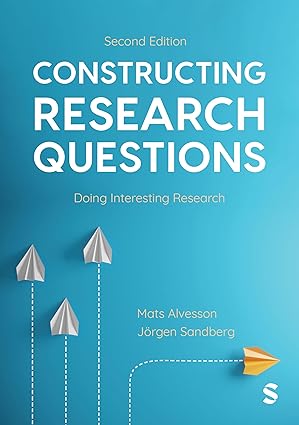
Tools, Instruments, Machines, and AI Systems
Article: “The Powerful Combination of Things and People at Work”
Sample quote from Jörgen Sandberg, Practice and Process Studies Research Hub Lead & Emeritus Professor School of Business University of Queensland, in Australia
One of the most fundamental questions for organizations is what constitutes work performance, as answering this question enables managers to identify strategies for improving the performance of individuals, teams, and entire organizations. While extensive research has explored how humans contribute to work performance through their competence and motivation, far less is known about the role of “things”—such as tools, instruments, machines, and AI systems—in shaping and enhancing work performance.
This gap is problematic because, while human skills and knowledge are essential, access to advanced tools and technologies is often the key to achieving competitive advantage and superior performance. This is especially true in the context of rapid digital transformation, where “intelligent” and “agentic” technologies are increasingly embedded in work processes.
A Competitive Landscape For Benchmarking Operations and Practices
Article: “Searching for Positive Outcomes and Effects in Competing for Business Excellence Awards”
Sample quote from Shadrack Asante (Faculty of Business and Law, Leicester Castle Business School, De Montfort University, Leicester, UK)
In our quest to understand why so many firms have been entering and competing for BEAs recently, our results suggested that the events are not just the glitz and glamor we see on our screens. Instead, they represent a competitive landscape where, through benchmarking their operations and practices, firms are encouraged by the hopes of winning these awards and act responsibly to meet the standards set by awarding bodies for recognition.