No one wants to relive the dark days of the covid-19 pandemic. But one undeniable plus from that era was how people came together for heartfelt, community-enhancing online events.
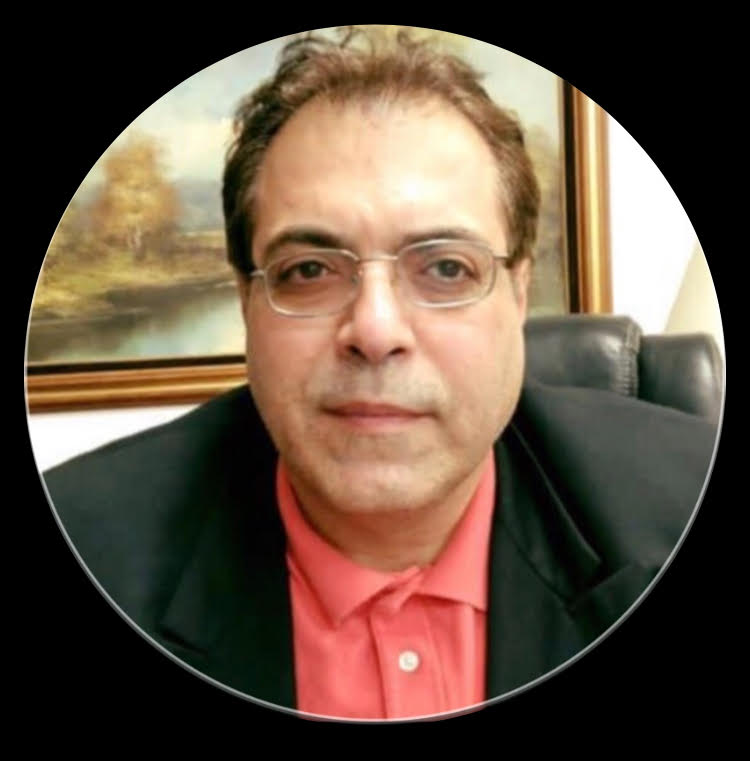
Five years ago, in early August 2020, Dr. Abe Khoureis, whom I did not know previously, reached out to me on LinkedIn. He offered to interview me on his Leadership and Politics podcast, about my Peter Drucker-related work. I really enjoyed the conversation with him, and the sense of mission and dedication he showed before, during, and after the podcast.
Over the years, I have found Dr. Abe to be warm, generous, and a serious community-builder. His multifaceted life as an author, professor, entrepreneur, podcaster, and disability advocate is a perfect example of the concept of “living in more than one world,” the subject of my first book.
After our August 2020 podcast, Dr. Abe invited me to be a guest on the first Global Thought Leaders Symposium, a terrific online event that ran four times between then and 2023. I was honored to be a guest each year.
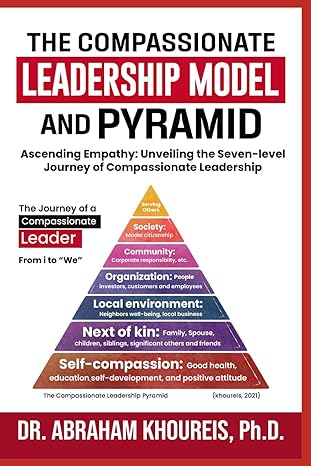
I had the opportunity to collaborate with Dr. Abe again, when I edited his article “Making the Case for Compassionate Leadership, ” in the Spring 2024 issue of Leader to Leader, where I am managing editor. The article is related to his book THE COMPASSIONATE LEADERSHIP MODEL AND PYRAMID: Ascending Empathy: Unveiling the Seven-level Path And Journey of Compassionate Leadership, which is now available in paperback.
I’m grateful to Dr. Abe for answering my questions about his work, writing, teaching, and disability advocacy.
For the non-specialist reader, how would you describe the overall nature of your multifaceted work and teaching?
At its core, my work is about helping people matter, to themselves, to each other, and to the world around them. Whether I am teaching in a university classroom, writing a book, mentoring leaders, or building businesses, I center everything I do around human dignity and potential. Over the years, I have developed tools, frameworks, and models that help individuals grow not only in competence, but in compassion. My work crosses disciplines, leadership, organizational behavior, management, psychology, education, social justice, entrepreneurship, but it all points back to a single intention: to awaken the human being behind the role, the title, or the struggle. To remind people that they matter.
Can you briefly and succinctly describe the two leadership models you have released during the past few years, and also give an idea of why the two models came out so relatively close together in terms of when they were formulated, announced, and published?
Yes. I introduced two leadership models that complement each other but speak to different aspects of the human experience.
The first is The Compassionate Leadership Model and Pyramid, which focuses on leading with strength through compassion, humility, and a deep awareness of those we serve, whether in business, government, or everyday life. It teaches that leadership is not about power, but about responsibility, presence, and moral clarity.
The second is The Rotating Self Model, which explores the inner life of the leader, or any human being, really. It shows how we are made up of many intelligent, responsive selves, all conducted by a core self I call the Nafsieu. This model teaches self-awareness, alignment, and the ability to consciously rotate into the self that best fits each moment.
Why did they come out so close together? Because they were born from the same time of reflection, and urgency. I had spent years observing people in leadership, in crisis, in conflict, and in transformation. I realized we can’t separate the inner leader from the outer leader. One without the other is incomplete. So, the two models came to life almost simultaneously, one speaking to the soul of leadership, and the other to the soul within the leader.
Can you also describe your work as a disability advocate, and how this fits together with your writing, teaching, and entrepreneurship?
I speak from experience. I have faced, and helped people with disabilities face the assumptions, the barriers, the isolation. I have also witnessed the strength, innovation, and brilliance that people with disabilities bring into every space they enter, if only they are given a real chance.
That is why I have committed part of my life’s work to disability advocacy. I bring this lens into everything I do, my books, my leadership programs, my show, my symposium, my classrooms, and my companies. Advocacy, to me, is not just about fighting for rights. It is about designing systems that include everyone from the start. It is about creating pathways where people with disabilities are not just seen but respected and empowered.
It is not a separate part of my work; it is the work. Because if our models of leadership, education, or business exclude those with different abilities, then they are neither compassionate nor complete. When I met leaders about my “Inclusion & Belonging” programs, some boasted about how they employ diverse groups of people and talent. When I inquired from them about how many disabled individuals in their fold, they fell silent. I told them, the real inclusion begins with disabled individuals in our school systems and workforce