
I am following up my July 23, 2025 post about the Summer 2025 issue of Leader to Leader, where I am managing editor, with this post about our new Fall 2025 issue number 118.
As in the previous and earlier posts, I’ve included links to all of the articles, including two at the end, from our ‘From the Front Lines’ section based on our interviews with some of today’s most important researchers.
The journal’s latest virtual issue, on Leadership Questioning and Inquiry, is free-to-read through the end of December, and the online monthly newsletters are always free-to-read. Leader to Leader’s forthcoming new section, ‘Bright Future: Viewpoints From Tomorrow’s Leaders,’ will showcase the writing of young leaders, ages approximately 30 and younger.
A Common Language Based in Civility
Author/Columnist: Sarah McArthur
Article: “What Will Really Make a Difference?”
Sample quote:
At this time in human history, when we face the extreme challenges of urgency, power, and separation, “Working Together” toward a cooperative future could not be more critical. And, to do so requires each of us to share our insights, knowledge, and experience as to what we know to be our greatest opportunities and challenges. We can also share our options and alternatives to address these issues, and listen to others as they share their views.
It is only from such dialogue and communication that we can build a healthy, functioning global society. It is from this dialogue and communication that we establish a common language based in civility, which will enable us to find common ground, upon which we may develop a common vision that will serve and include all of the stakeholders – all of us.
A Cultural Myth That Remains Unacknowledged
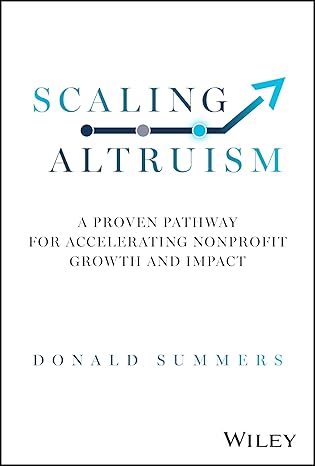
Author: Donald Summers
Article: “The Myth of Nonprofit Uniqueness”
Sample quote:
In my work to transform hundreds of struggling nonprofits into high performing, scalable organizations, I have discovered a common underlying constraint: a cultural myth that remains unacknowledged, even by many social impact experts, one I call The Myth of Uniqueness. Nonprofit board members, executives, philanthropists, even widely respected sector leaders and management scholars—smart and well-meaning people who are trying their best to make the world a better place—operate under the assumption that nonprofits are special types of organizations, ones for which the principles and practices of for-profit business management are largely irrelevant or apply only at the margins.
Adaptability, Influence, and Emotional Intelligence
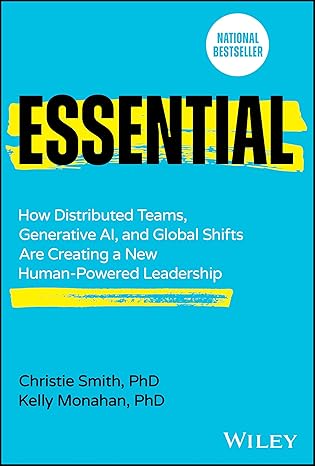
Author: Christie Smith
Article: “Redesigning the Leadership Model to Restore Trust, Talent, and Economic Health”
Sample quote:
If organizations want to build leadership that lasts, they need to rethink who they promote, how they develop leaders, and how leadership itself is structured. Instead of rewarding stamina and sacrifice, companies should prioritize adaptability, influence, and emotional intelligence. The most successful organizations of the future won’t rely on a few individuals at the top making all the decisions. Instead, they’ll embed leadership across all levels, where decision-making, accountability, and vision are shared, not concentrated.
This means leadership development must start earlier—not as a crash course when someone gets promoted, but as a deliberate investment in building adaptable, people-focused leaders. It also means making leadership desirable again. Right now, stepping into leadership feels like stepping onto a treadmill that never slows down. That needs to change. When leadership is about influence and shared responsibility, rather than constant crisis management, more people will be willing—and excited—to step up.
Our Minds Curate Reality
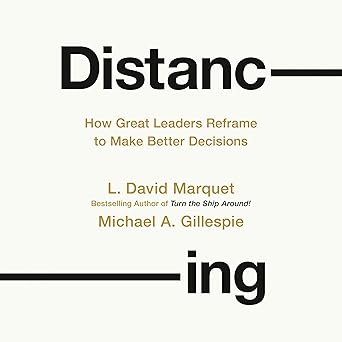
Authors: David Marquet and Michael Gillespie
Article: “Distancing: Be Your Future Self”
Sample quote:
When asked to describe our feelings, we use “I,” “me,” and “my” pronouns automatically. When asked to locate our sense of self, most people—especially in Western cultures—point to an area behind and slightly above the eyeballs. We look out at the world from behind our own eyes and think about things as happening to “me.” All physical distance is relative to where I am, “here,” and all time is anchored by “now.” This “me-here-now” frame is the experience of the immersed self.
This default lens colors the way we view the world as a function of our hopes, dreams, fears, and hangups. Our view is predictably biased in ways that flatter us and help us feel good about ourselves. Our minds curate reality, cherry picking the evidence from among everything we see, hear, feel, and experience to convince ourselves that we are good and the decisions we have made in the past are correct. This does not make for a wise leader.
Prioritizing Interconnectedness, Sustainability, and Long-Term Stewardship
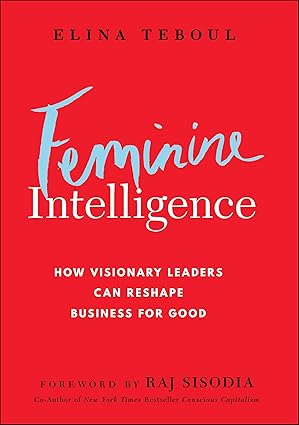
Author: Elina Teboul
Article: “Broken Open: Unlocking Authentic Leadership through Feminine Intelligence”
Sample quote:
Egocentric leadership focuses predominantly on domination, control, and individualistic success. Transitioning toward congruent, authentic leadership involves shifting from hierarchical power dynamics to collaborative and empowering leadership styles. This “power with” approach elevates collective capabilities and fosters shared success.
An illustrative example is Faith in Nature, a pioneering UK-based company, which (with legal help from the Earth Law Center) appointed a director specifically tasked with representing the natural environment in corporate decision-making. This revolutionary action embodies feminine intelligence by prioritizing interconnectedness, sustainability, and long-term stewardship, fundamentally reshaping conventional corporate governance.
Leaders Need a System
Authors: Debbie Collard, Susan Ireland, Sarah McArthur
Sample quote:
The dynamic and rapidly changing business environment of today is challenging for everyone and especially so for leaders. We are often asked in our work with leaders at all levels how they can lead their organization while managing competing priorities and focusing on the most important things.
Our answer is based on our experience: Debbie’s three decades of involvement with Baldrige, including guiding Boeing organizations on using Baldrige and a term as chair of the Baldrige Foundation Board of Directors; Susan’s experience as a “Working Together” practitioner during her career, including on the Boeing 777 program; and Sarah through her role as Editor-In-Chief of Leader to Leader and “Working Together” partner with Alan Mulally. Leaders need a system. We recommend that system be Alan Mulally’s Our “Working Together”© Leadership and Management System, which implements the Baldrige Excellence Framework.
Organizational Change and Transitions in All Sectors
Author: Jennifer J. Fondrevay
Sample quote:
Whether you are a Chief Executive Officer/CEO, executive, director, or department head, as a leader you’ve likely had to make pivotal decisions overtime to help your organization grow. These decisions, such as a reorganization, strategic pivot, or pursuing a merger or acquisition, while necessary for growth and adaptation, often trigger an unexpected phenomenon among your workforce: grief.
Yes, grief. The same emotional process we associate with personal loss applies to organizational change and transitions in all sectors—from businesses to nonprofits, educational institutions, government agencies, and community organizations. When I work with executive teams navigating transitions, they’re frequently surprised to discover that their carefully planned, strategically driven decisions launch their employees into a grief cycle remarkably similar to what psychologists describe as the emotions following personal trauma.
Seeking and Experiencing a Sense of Belonging
Author: Tamara J. Woodbury
Article: “Navigating Chaos with Heart: A Leadership Guide for Uncertain Times”
Sample quote:
While working as CEO of the Girl Scouts in Arizona our national organization conducted research to determine why girls joined the Girl Scouts and why they continued to participate year after year. The answer to both was that girls were first and foremost seeking and experiencing a sense of belonging in the Girl Scouts. While the data showed that girls also joined and returned because they wanted to learn and try new things, they wanted to make new friends and for older girls, they wanted the chance to travel to new places, what girls at every age valued most was the sense of belonging they felt in addition to feeling seen and accepted as a unique and special individual.
Following some of the organizational development practices shared with me by a person in senior leadership at Hewlett Packard, I employed one of HP’s organizational development social researchers to help us, the Girl Scouts, identify what were the activities and practices that our volunteers and staff did that contributed to a girl feeling a sense of belonging. Once they identified what were the most consistently identified practices and actions that lead to this result, we developed our strategy and guidelines that we believed would help sustain those practices and programs in order to continue to achieve what girls wanted most from participating in Girl Scouting.
Pressure Changes How We Act
Author: Sabina Nawaz
Article: “Caught in the Sole Provider Trap? Leadership Strategies to Break Free”
Sample quote:
It’s not power that corrupts us; it’s pressure. Pressure doesn’t just stress us out; it also changes how we act. It undermines our good intentions and overwhelms our commitments to be someone others want to follow. And it affects everyone—boss and employee alike. The higher we ascend the hierarchical ladder, the more pressure we’re under. Chances are that some instances in the pressure cooker will cause us to react in self- and team-sabotaging ways.
Some of these behaviors are obviously out of bounds, like raising our voice, giving harsh criticism, or otherwise bullying and sending employees scuttling away with their pressure gauges redlining. When a boss is having a hard impact on employees, guess what? Employees huddle miserably at their desks playing video games or, as research shows, even deliberately make mistakes. Imagine the extra pressure that creates.
Success is Never Just About Effort—It’s About Conditions
Author: Britt Yamamoto
Article: “The Soil of Collaboration: Cultivating Conditions for Working Together”
Sample quote:
My understanding of collaboration didn’t begin in a boardroom or a leadership seminar—it began on the farm and in the soil. Before I ever stepped into the worlds of academia, nonprofits, or corporate partnerships, I spent years working the land, where I witnessed firsthand that success is never just about effort—it’s about conditions.
Farming is a collaborative act at its core. The soil, water, climate, and human effort must align to yield a harvest. No single factor alone—no matter how strong—can override poor conditions. Even the most experienced farmer cannot will crops to grow if the soil is depleted, if rain does not come, or if pests go unchecked. The same holds true for collaboration. A team’s passion, expertise, or shared mission will struggle to bear fruit if the conditions for working together are not intentionally cultivated.
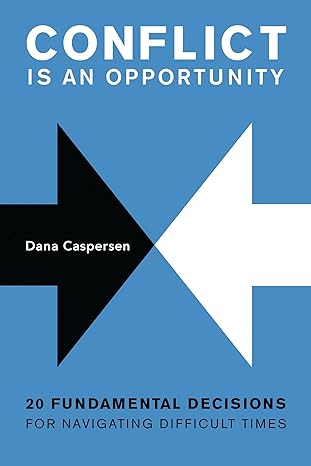
Building Power Together
Author: Dana Caspersen
Article: “The Power Matrix: How Leaders Can Lead Without Coercion”
Sample quote:
Power is rarely balanced in organizational conflicts. There is usually a relative difference in the amount or types of power that people are accessing. Ignoring these power dynamics doesn’t reduce destructive conflict; it just makes its mechanisms less evident. At the same time, power differences don’t necessarily block productive ways forward. Awareness of these differences helps leaders move with greater accuracy to find effective strategies.
Crucially, it is possible to build power both with those who share your perspective and those who initially oppose it. People on different sides of conflict can often work in concert to build power together that is greater than what each person or group could build alone. Although division can be persuasively self-strengthening, question its aura of permanence.
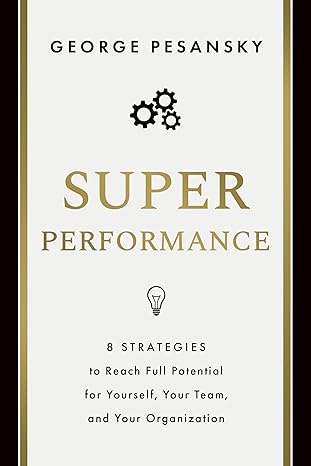
Entrepreneurship, Creativity, and the Willingness to Take Risks
Author: George Pesansky
Article: “The Golden Hour: Your Secret for Unlocking Superperformance”
Sample quote:
Entrepreneurship, creativity, and the willingness to take risks to learn and improve are the hallmarks of what makes a successful organization—both in the short term and long term. However, as we increase the pressure in an organization, we crush entrepreneurship and creativity because the risk of being wrong, making a mistake, or not performing as expected becomes too great. And so, we lock ourselves into a prison of expectations where we only need to be as good as we absolutely have to be, and doing anything above and beyond this bare minimum could come at a cost—the risk of making that mistake in a very high-profile and difficult way.
Creating a Great, Lasting Culture
Author: Michael J. Critelli
Article: “How Leaders Can Achieve Long-Term Impact and Legacy”
Sample quote:
Like many people inspired by biographies of great leaders, I believed that great leaders could succeed anywhere. Some can, but, in my case, my compatibility with Pitney Bowes values and leadership behaviors was foundational to success as CEO (May 1996 to May 2007) and Chairman (January 1997 to December 31, 2008).
Founded in 1920, Pitney Bowes invented secure postage payment through meters that directly imprinted postage on envelopes and labels. It later revolutionized business mail automation and shipping with advanced hardware, software, services, and financing and digital adaptation solutions.
Walter Wheeler, Pitney Bowes’ longest serving CEO (1938–1960 and 1963–1969), who joined the company in 1919, built the foundation for these values. He was that rare leader who created a great culture that long outlasted him.
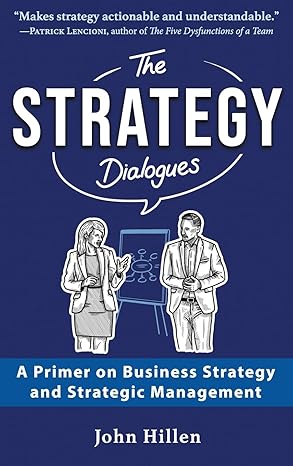
A New Dynamic for Competitors and Customers
Author: John Hillen
Article: “Effective Leaders Must Be Strategic Thinkers”
Sample quote:
According to a study by researchers David Rooke and William Torbert, published in Harvard Business Review in 2005, only a few executives are natural strategists—just 4% of the executives surveyed. By “strategists,” they mean executives who principally justify their moves and their thinking in terms of connecting one event to another and then to another (or several others), the accomplishment of which then creates a certain institutional movement, which then creates waves in the marketplace—causing a new dynamic for competitors and customers, which in turn opens up opportunities not previously available.
According to the study, most executives use logic based on expertise (“I’ve got the data—therefore we must do it this way….”), short-term achievement (“we want to get this done soon so it will roll up in the quarterly financials….”), or diplomacy (“I think everybody can leave this meeting happy that their equities were protected….”). Not many executives persuade people with the logic of strategy.
People Feeling Valued, Fulfilled, and Appreciated
Author: John Hibbs
Article: “The Monergy Flow: Aligning Profit, Purpose, and Relationships”
Sample quote:
The impact of a positive work environment doesn’t stay at the office. People don’t just leave their emotions at the door when they head home. A stressed, burned-out employee doesn’t just suffer at work—they bring that energy home to their families. Tension at work creates tension at home.
Frustration in the office leads to frustration in relationships. But the reverse is also true. When people leave work feeling valued, fulfilled, and appreciated, they take that positive energy home with them.
They are more patient parents, more supportive partners, and more engaged members of their communities.
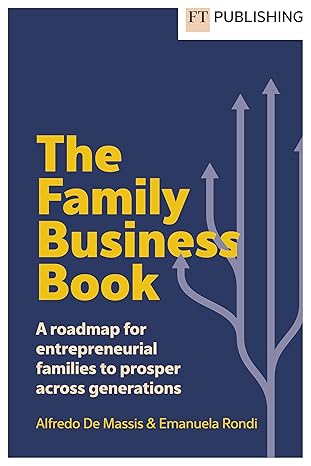
Defining and MeasuringOrganizational Success
Article: “Fresh Perspectives on Organizational Goal Setting”
Sample quote from Alfredo De Massis (Professor of Entrepreneurship and Family Business, University of Chieti-Pescara and IMD)
This article offers a fresh perspective on how we define and measure organizational success. Traditionally, success has been equated with financial performance—such as profits or shareholder value. However, we argue that this view is too narrow. Organizations have diverse goals, and therefore, using a financial KPI {key performance indicator} to compare them without measuring their goals is not meaningful. We propose that success should be understood as the achievement of an organization’s specific goals, which may include non-financial aims such as sustainability, employee well-being, or community impact.

Artificial Integrity Gaps in Systems
Article: “Technological Stockholm Syndrome: What it Means, and Why it is Important”
Sample quote from Hamilton Mann (Group Vice-President Digital at Thales and lecturer at INSEAD and HEC Paris)
The cost of artificial integrity gaps in systems, whether or not they involve AI, that give rise to such a syndrome, directly burdens an organization’s human, cultural, reputational, technological, and, of course, financial capital. This cost results in sustained value destruction, driven by intolerable risks and an uncontrolled increase in the cost of capital invested to generate returns (ROIC), turning these technological investments into a structural handicap for the company’s profitability, and consequently, for its long-term viability. True leadership cannot be distant or detached from such impact.