
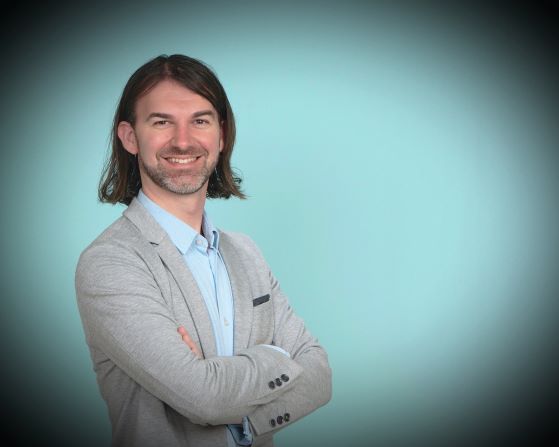
In November 2018, I attended an in-person event, Time to Expand Our OD Discipline? Here Comes Knowledge Management and Conversational Leadership!, produced by the Chesapeake Bay Organization Development Network (CBODN), in Bethesda, Maryland; near where I live. The presenter was John Hovell, CEO and co-founder of STRATactical.
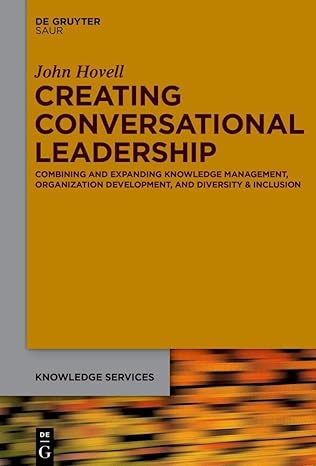
I was unaware of John before that evening, but I was impressed with his presentation and how he interacted with the group, and connected with him soon after on LinkedIn. In 2022, his book Creating Conversational Leadership: Combining and Expanding Knowledge Management, Organization Development, and Diversity & Inclusion was published by De Gruyter Saur. When I learned recently that he became Director of Strategic Partnerships for Power + Systems, I invited him to answer questions for my blog about his multifaceted career. (One of the co-founders of the company, Barry Oshry, wrote a classic book, Seeing Systems: Unlocking the Mysteries of Organizational Life, for Berrett-Koehler, publisher of my first book.)
John’s background and work reinforce the idea that knowledge is not just an abstraction that lives within individuals and flows through workplaces. Knowledge has to be lived and communicated in an honest, authentic way, inside and outside organizations. With so much current emphasis on generative AI, the role of humans in the knowledge process continues to be redefined.
For the non-specialist reader, can you describe the nature of your day-to-day work, given that you are involved in so many different activities?
My primary focus is advancing the reach and impact of Barry and Karen Oshry’s work through their organization known as Power + Systems, as you’ll see in the following question. Day to day I work with individuals, groups, teams, and organizations. Mostly, I convene conversations that otherwise wouldn’t have happened (which is a leadership quote from Dr. Patricia Shaw). I love being a part of collective sensemaking and meaning making. I do a lot of work in some fairly rare fields/disciplines, namely Knowledge Management (KM), Organization Development (OD), Diversity Equity Inclusion Accessibility (DEIA), and Relational Organizational Gestalt (ROG). I am a part of multiple communities where we advance those fields, and especially apply them inside organizations. I also practice Project Management (PM) on a daily basis because nearly everything we do is part of a larger project or program. I also do quite a bit of facilitation for institutions and universities because I love advancing these fields alongside new voices and perspectives.
You recently joined Power + Systems as Director of Strategic Partnerships. Can you briefly describe the organization, its founders Barry and Karen Oshry, and what your role entails?
Power + Systems is an international non-profit organization that ensures leaders, teams, and organizations see, understand, and intervene with system dynamics. We’re best known for 3 products, the Power Lab, the Organization Workshop (OW), and When Cultures Meet. These 3 products offer a front door to “see” that many challenges are not personal or interpersonal, but rather systemic or structural conditions that shape how people see, think, and act. We not only make these invisible forces visible, we create and advance shared language for leaders to intervene where necessary (remember that leadership is a practice that is available to everyone, as opposed to a job title). All of the details can be found at https://www.powerandsystems.com.
Barry and Karen are the creators of the 3 experiential workshops. Barry is widely considered a pioneer in systems thinking, organization development, and organizational theory. He’s written 10 books on these topics. His wife, Karen, is the co-founder of Power + Systems and has been foundational in designing the experiential learning methodology in the 3 products. Similar to Barry, Karen is a top notch facilitator known for “holding space” and the “quiet architect” behind the emotional and relational depth of the workshops. She ensures that people see themselves in the system in addition to “simply” learning about systems.
My role is to continue to grow our partnerships. Some of our partnerships are with individuals, such as our certified trainer network. That network has over 1600 people in it, and growing every month! Some of our partnerships are with organizations that experience our workshops. Some of our partnerships are with learning institutions that run our experiential workshops.
Three years ago, your book Creating Conversational Leadership: Combining and Expanding Knowledge Management, Organization Development, and Diversity & Inclusion was published. Can you briefly describe what Conversational Leadership is, and where the term/concept originated?
Conversational Leadership is an emerging discipline to not only practice intentionally “seeing your conversations,” but also to see and realize “aggregate conversations,” or general discourse, e.g. the conversations that are larger than any one single conversation. It’s a way of seeing how hyperconnected we all are, as well as the complexity and dynamics of conversations. It turns out that conversations are similar but different to disciplines such as communications, linguistics, facilitation, coaching, storytelling, complexity sciences, conflict resolution, systems thinking, and organizational learning. We’re uncovering more and more conversational patterns, models, theories, and interventions as the field emerges! What if we all individually and collectively dramatically improved our conversational mindset, skillset, and toolset?
It’s hard to know exactly where the term/concept Conversational Leadership originated. We found a paper from the 1950’s with the term in it. We know that several modern day people reference the term, such as Dr. Juanita Brown and David Whyte. David Gurteen and I publish and practice Conversational Leadership on a daily basis for 7 or 8 years now. Donita Volkwijn and Saule Menane help design and facilitate Conversational Leadership as well. Feel free to join in the conversation at https://www.conversational-leadership.net.