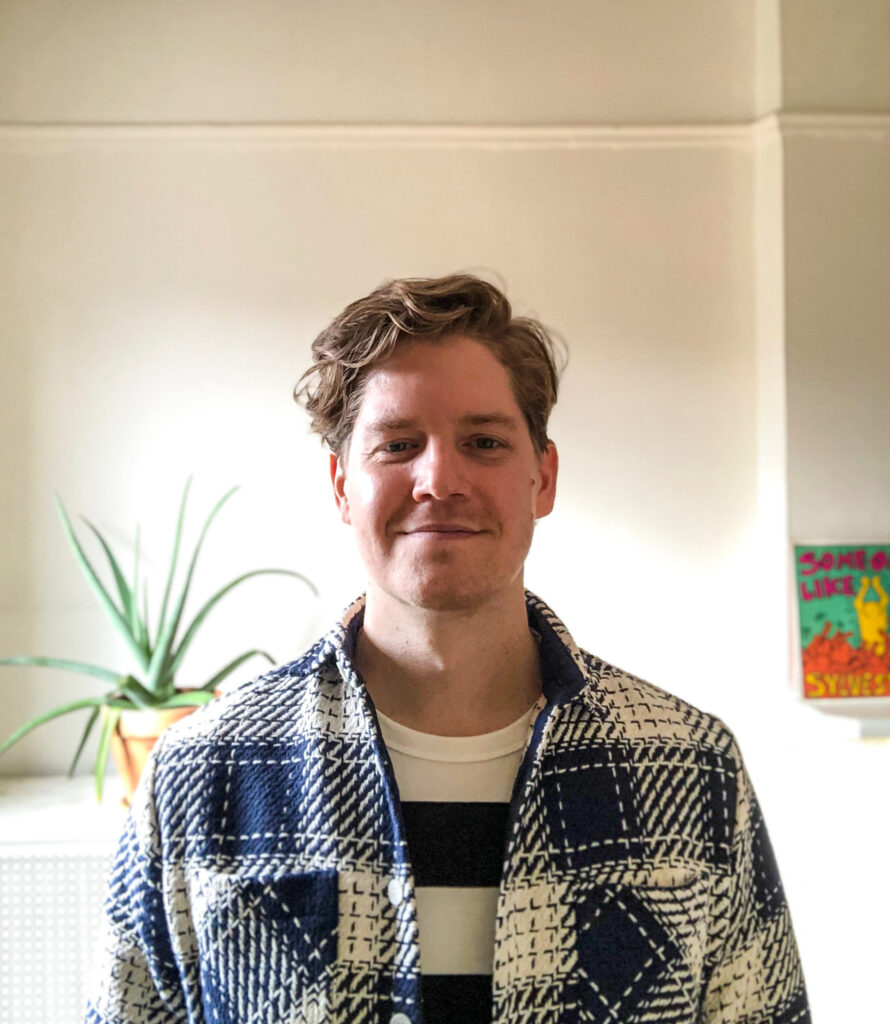
In August 2024, I interviewed the Brooklyn-based writer Brendan Gillen, after the release of his rock music themed novel Static. I first learned of Brendan through his author Q&A with Deborah Kalb the previous month, also about the book.
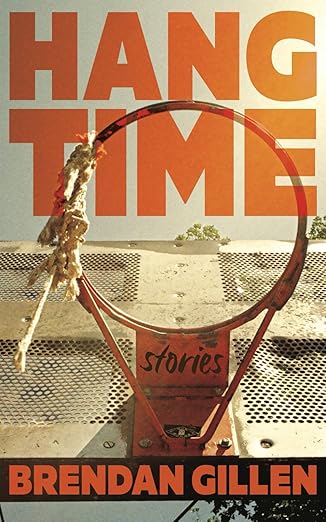
Deborah interviewed Brendan again a month ago, on December 17, about his new, sports-themed short story collection Hang Time. The appreciation of rock music and sports have consumed an incalculable number of hours throughout my life, so it’s gratifying to get to know another writer who is tuned to the same wavelength.
I reached out to Brendan soon after reading Deborah’s recent Q&A with him, and invited him to do another Q&A for my blog. I’m grateful to him for answering my questions about his overall work, writing, and time management as he embarks on his latest writing project.
In our previous interview, I asked: “How would you characterize your work, encompassing writing in its various forms, video and agency work, DJing, and how it all fits together?” Have any of these elements changed in the past year and a half, and if so, how?
Thanks for the space to reflect, Bruce. I can’t believe it’s been a year and a half since Static came out. That’s wild to think about. Professionally speaking, I recently left my full-time gig at a small production agency to strike out on my own with my creative partner. It’s been hard, but it’s also been rewarding and fun to think about the kind of business we want to build. We both spent our early careers at ESPN, so we’re fortunate to have maintained great relationships with former colleagues who have gone on to leadership positions at Fox Sports, Anheuser-Busch, Premier League, the US Open, and elsewhere. We work hard to be open, collaborative, dependable, and to not be precious about an idea or a creative solution.
I also published Hang Time, a collection of sports-themed short fiction, late last year. It’s been really fulfilling to see that project come to life, and if there’s anything that unites my professional creative work and a personal creative project like Hang Time, I think it’s that idea of trying not to be precious. To loosen my grip on the reins bit by bit. Because I have a tendency to push for “perfect,” which a) doesn’t exist and b) is the creativity killer.
When you were writing the short stories that comprise Hang Time, were you always thinking in terms of collecting them for a book, and if so, did this affect the subject matter you chose as well as the choice of specific literary journals you submitted your stories to?
First of all, I have to thank Scott Bolohan, who runs both The Twin Bill—a fantastic journal focused on baseball lit—and .406 Press, which put out Hang Time. Scott (along with other fantastic sports-oriented journals like Under Review, Words & Sports Quarterly and a handful of others), has done a tremendous amount of work to give sports literature a worthy platform.
I didn’t necessarily plan to write a sports-themed collection, but over time, I had amassed a folder of stories where sports were either the heartbeat or hovered around the edges in a meaningful way. Last year, I was in touch with Scott regarding an anthology of pieces he was putting together for The Twin Bill (where “Rickey Henderson Sits by a Lake” first appeared) and he mentioned that if I ever had a collection, he’d be happy to take a look for .406. By that time, my folder of sports pieces had grown, so I shared what I had, and Scott said he’d love to put it out.
I’m proud of how organically the project came together. I’m the kind of writer where, if I set out to write about a particular theme or subject, usually the piece doesn’t turn out great. It’s difficult, but I try, as much as possible, to get out of my own way and see where the piece takes me. Let the subconscious take the wheel for a bit and trust that it knows the way. And I suppose as someone who grew up in a sports family (my dad coached college basketball for 30 years) and who has always loved sports, the subject is bound to bubble up in my fiction every now and then.
You mentioned in your latest Deborah Kalb book Q&A that you are working on a full-length novel, extending the story “Man Up” in the current collection. How does this affect your time management in non-writing aspects of your life, and related writing areas such as new short stories and/or nonfiction?
Time management is always the challenge! I do a lot of writing and concepting in my professional life as a writer/creative director in the advertising space, so it can be difficult to turn off the creative problem-solving part of my brain to recharge. And I do believe this is super important. You have to give yourself time to put the pencil down and refuel. Because whether it’s for a client, or for a personal project, creative juices aren’t an infinite resource.
With “Man Up,” which I’m actively working on and which I hope becomes a novel-length project, I try to sit down for an hour or so every morning and move the ball forward, no pun intended. I get antsy if I sit to write fiction for more than an hour or 90 minutes, so one of my biggest struggles as a writer is to come to terms with that and not feel guilty about doing “more.” I have to trust myself that if I chip away a little bit every day, over the course of six months, a year, eighteen months, or however long it takes, there will be a manuscript at the end of it. It might not be great, but there will be a draft of raw material to work with. And you have to believe that you can make it better with every draft.
For me, short fiction and flash fiction become almost like gym exercises. Ways to have fun and flex my creative muscles. Try a different voice, a different POV, an odd first sentence that feels exciting, and see where it all takes me. Writing is hard enough. It’s important to remind yourself that it’s okay to have fun with it every once and a while.