
I am following up my February 16, 2026 blog post about the Winter 2026 issue of Leader to Leader, where I am managing editor, with this post about our Spring 2026 Issue 120. As in the previous and earlier posts, I’ve included links to all of the articles, including two at the end from our ‘From the Front Lines’ section based on our interviews with some of today’s most important researchers.
This post also includes the two articles from Leader to Leader’s section ‘Bright Future: Viewpoints From Tomorrow’s Leaders,’ which made its debut in Winter 2026. It showcases the writing of young leaders, ages approximately 30 and younger; this time from Shanthi Bhaskar and Julia Jones.
I’m confident that you will find these takeaways, and the articles themselves, to be useful, valuable, and relevant for your leadership journeys.
Positive Progress For Humanity
Author/Columnist: Sarah McArthur
Article: “Respect for All People”
Sample quote:
To have respect for others is the lubricant that allows us to collaborate and innovate for a better world for all, regardless of our differences. Respect for all people is the mindset that allows for civil discourse, for listening, for understanding, and for inclusion of all of the stakeholders to create value and growth for all. And respect for all people reveals itself clearly in the health, contribution, and progress of institutions, businesses, and organizations across the sectors that form our society.
Creating Human and Economic Value in Harmony
Author: Bob Chapman
Article: “The Way We Lead Impacts the Way People Live”
Sample quote:
As leaders, we have a choice. We can perpetuate a system that prioritizes profits over people, or we can embrace a philosophy of creating human and economic value in harmony. This is not just limited to for-profit business; it is applicable to non-profits or municipal organizations as well. Whatever organization we lead, Truly Human Leadership calls us to see those in our care through a different lens. I was taught that people were functions for my and my organization’s success. But when my lens was reversed and I saw those in my care as someone’s precious child, it changed everything. The waywe see people affects the way we treat people.
Peer-to-Peer Influence is More Powerful Than Top-Down
Author: Connie Dieken
Article: “Leadership and The Influence Flip: Why Authority No Longer Works”
Sample quote:
Rumor is the most potent form of communication. It feeds our fundamental human need to belong and bond with others. Here’s where modern leaders get even more strategic about influence: they leverage the rumor mill. They’ve accepted that unaddressed rumors quietly derail entire initiatives.
Every organization has an underground network to share what’s “really” happening. Old-school executives dismiss this as gossip and misinformation. That’s a big mistake in today’s flipped world, where peer-to-peer influence is more powerful than top-down. Smart leaders don’t fight the grapevine—they tap into it strategically.
A Toolkit That Can be Customized to Your Culture, Industry, and Vision
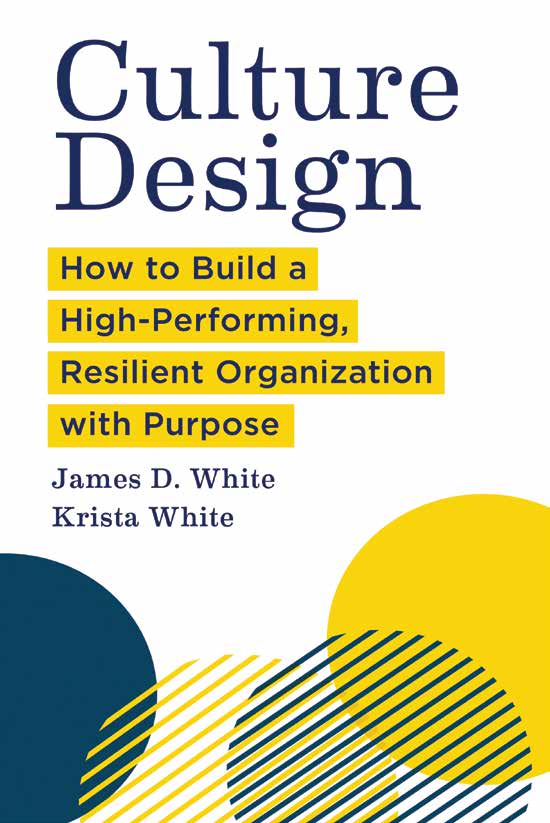
Authors: James D. White and Krista White
Article: “Designing Culture Change: Defining the Reality of Your Organization”
Sample quote:
During his 2008–2016 tenure as CEO of Jamba Juice, the smoothie chain now known as simply “Jamba,” James used many tools with his team in their turnaround efforts when he was defining the culture he wanted to create. These tools allowed them to create a clear assessment of where the reality of the culture stood and how it needed to shift to enable their strategic goals. We are sharing a few of those frameworks that James and Krista have used throughout their careers to give you a breadth of options that may work for your organization, and we include examples of how to apply them that we hope you will find to be as inspirational. The point here is less a how-to guide and more a toolkit that can be customized to your culture, industry, and vision.
Stop Collapsing and Start Creating
Author: Jeremy Hunter
Article: “Leading from the Green Zone: Why the Next Leadership Revolution Starts in the Nervous System”
Sample quote:
In a world facing massive challenges, leaders need to be more than less stressed or even more resilient. It calls for real evolution: a shift in the quality of their being. Increasingly, leaders are seeking something more embodied, more expansive, and fundamentally human. This shift can fuel genuine connection, collaboration, and meaningful results. But where to begin?
The nervous system is the answer. Because it interprets experience, navigates pressure, and informs how we connect with others it is our most fundamental infrastructure. When leaders learn to work with it rather than against it, they access new capacities. They stop being pushed by the moment and begin shaping it. They stop collapsing and start creating. They generate fields of connectedness that bring order to chaos.
Failure isn’t the Opposite of Success
Authors: Deborah Grayson Riegel and Fiona Macaulay
Article: “The Leadership Skill No One Teaches: How to Fail Forward”
Sample quote:
In our increasingly complex world, the leaders who thrive will be the ones who appreciate that failure isn’t the opposite of success. Approached strategically, failure isn’t failure, it’s success intelligence. For leaders who can understand this foundational distinction, setbacks are just competitive advantages waiting to be leveraged.
That transformative insight doesn’t take root overnight. It grows out of consistent practice and supportive relationships. It requires an organizational culture that places a higher value on learning than perfection (In our experience, “perfection” usually means playing it safe.). But when leaders commit to the bolder path, the payoff ripples out beyond individual career advancement. They become the leaders their organizations need to navigate the future with strategic intelligence, resilience and, not to be underestimated, confidence.
Challenging Assumptions and Scaling Disruptive Ideas
Author: Jon Levy
Article: “There Is No Such Thing as an Essential Leadership Trait. But there is One that Defines it”
Sample quote:
Ask people why they follow leaders and they’ll often say “vision and charisma.” But most leaders don’t have both. Many have neither. What they do have is a handful of super skills that are disproportionately strong. These super skills are so powerful that they trigger the “better future” effect in followers.
Consider the media legend Oprah Winfrey. She does not have a reputation for technical expertise in business strategy, yet her ability to connect with people and elevate their stories created one of the most successful media empires in history. Or look at Reed Hastings, the co-founder of Netflix, who leaned heavily on his skill for challenging assumptions and scaling disruptive ideas, even when they defied conventional wisdom. Each of these leaders had a super skill that made people believe the future could be different under their guidance.
Moving From Autopilot to Awareness
Author: Muriel M. Wilkins
Article: “Getting Out of Your Own Way: A Roadmap for Leaders”
Sample quote:
One of the most powerful shifts a leader can make is moving from autopilot to awareness. Our beliefs shape our thoughts. Our thoughts drive our actions. And our actions shape results.
Research in leadership development consistently shows that self-awareness is one of the strongest predictors of effectiveness. Leaders who accurately perceive their own strengths, weaknesses, values, and impact on others outperform their peers across nearly every metric. Yet here’s the paradox: many leaders overestimate their own self-awareness. Studies show that while most people believe they’re self-aware, only 10%–15% truly are. That gap explains why so many repeat the same frustrating patterns—until they learn to pause and examine the beliefs driving their choices.
An Alternative Way of Thinking About Business
Author: Andrew C. Wicks
Article: “Ultimate Questions: Relational Stakeholder Theory and the Good Life”
Sample quote:
Business is about people coming together to make each other better off. This alternative way of thinking about business was most eloquently expressed by my colleague Ed Freeman as stakeholder theory. It advocates that businesses focus on serving stakeholders who make the firm a viable and ongoing entity—and stakeholders can include, for example, customers, suppliers, employees, financiers, and members of the local community. If we focus on taking care of these people and learning what they want from their interaction with the company, then we have the makings of a great business.
Creating Presence and Intentionality
Author: Erin Coupe
Article: “Rituals Over Routines: Redefining Leadership in an Age of Overwhelm”
Sample quote:
At first glance, the difference between routines and rituals may appear semantic. Both involve repeated actions. Both create structure. But their impact couldn’t be more different.
A routine is checking email first thing in the morning. A ritual is taking 5 minutes to center yourself before opening your inbox, so you respond with clarity instead of reactivity. A routine is running to and from back-to-back meetings. A ritual is taking deeper breaths and a brief pause before meetings begin, creating presence and intentionality. Routines keep us moving. Rituals keep us aligned.
Framing the Problem, Setting Intent, and Evaluating Tradeoffs
Author: Hamilton Mann
Article: “Escaping AI Productivity Traps: A Leadership Playbook for Artificial Integrity”
Sample quote:
As AI takes over functions like writing, summarizing, formulating responses, or proposing ideas, users tend to withdraw effort from these tasks or even devalue them. This shift causes a slow but deep erosion of human faculties associated with productive effort, such as analyzing problems, confronting ideas in teams, forming judgments without algorithmic assistance, producing autonomous reasoning, or simply facing the discomfort of doubt.
The risk is not that AI writes a draft. The risk is that people lose the habit of framing the problem, setting intent, and evaluating tradeoffs. Over time, an organization can become highly responsive and strangely shallow.
Making Complex and Risky Decisions with Confidence
Authors: Stephen Wunker and Jonathan Brill
Article: “Becoming an Octopus Organization: A New Model for Leadership in the AI Age”
Sample quote:
Agentic AI, autonomous AI systems that can plan, reason, and then complete complex, multi-step tasks, curate data to suit the needs of managers across the firm and ecosystem. They digest the information accurately and spotlight its most critical implications. As managers formulate their responses, AI flags their biases, tests scenarios, and recommends guardrails, all in real time. Software improves executive judgment at every level, allowing even junior staff to make complex and risky decisions with confidence. Interfaces and agentic frameworks allow the organization’s “arms” to trade information laterally, instead of feeding it up or down. Like employees, leaders can also access real-time insight about what is going on across the organization, providing the confidence to remain hands-off.
Deliberate Investment of Personal and Relational Resources to Achieve Meaningful Goals
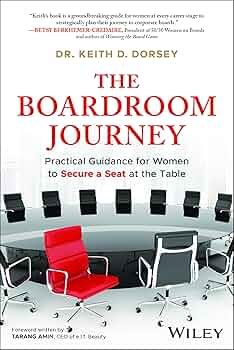
Author: Keith D. Dorsey
Article: “When Your Why Isn’t Enough, Check Your Commitment Capital”
Sample quote:
In previous articles, I have discussed the importance of human capital (i.e., the sum of education, knowledge, skills, personal attributes, and experience to generate a given set of outcomes) and social capital (i.e., the sum of the structural, cognitive, and relational resources available within a social network and made available to others).
Commitment capital is the combination of human, social, and other resources an individual uses to execute and complete a specific task. This use of “commitment capital” differs significantly from November 2024 academic interpretations of the term by Jim Andersén and Christian Jansson, which focus on organizational-level employee engagement. Here, it refers instead to an individual’s deliberate investment of personal and relational resources to achieve meaningful goals.
Teams Thrive When Every Voice is Included
Author: Dana P. Rowe
Article: “Rehearsing Leadership: The Power of Practice and Feedback”
Sample quote:
In theater, a good director knows the audience’s attention can’t rest on just one actor. Even in a chorus scene, every performer contributes to the energy. Directors continually restage and adjust the actor’s positions or blocking so no one is left in the shadows, the audience’s focus is guided, and the story remains clear.
Leadership requires the same sensibility. Teams thrive when every voice is included, not just the loudest or most senior. When people feel invisible, they disengage. When they feel valued, they bring forward their best work.
Bright Future: Viewpoints from Tomorrow’s Leaders
Daring to Speak, Organize, and Connect
Author: Shanthi Bhaskar
Article: “Leading Through Growth, Not Perfection”
Sample quote:
Looking back, I see how every experience, from speaking in a soup kitchen, to working with students in Tamil Nadu, to leading initiatives at Pitt, has taught me that leadership is not a single act, but a continual process of learning, adapting, and growing.
I had always considered myself an introvert—the Myers-Briggs test only confirmed what I already knew. I had plenty of ideas, but rarely the courage to share them out loud. Instead, I poured my energy into service: organizing food drives, tutoring, and volunteering at community cleanups. For a while, I believed my role was to quietly fix what was broken, not to lead. Over time, I came to realize that service gave me purpose, and also gave me a mirror—a chance to see how much change depends not just on doing, but on daring to speak, organize, and connect.
Adopting a “Yes, and” Mindset
Author: Julia Jones
Article: “Reframing Leadership: The Soft Way Forward “
Sample quote:
A mentor once told me that I am an Expert at Belonging. That compliment made me think back on the moments that earned it. I’ve invited missing voices into meetings and ensured the spaces we created were safe for everyone. Wherever I am, I aim to bring people together and ensure their voices are heard and acknowledged. I believe that everyone’s ideas are valued equally, that there should always be a safe space to speak without judgment, and that we all share a clear purpose that drives us forward. One practice that reflects this approach is adopting a “yes, and” mindset, which I learned from my theater friends. This encourages everyone to share more ideas, knowing that each one can be built upon and improved collaboratively. In leadership, creating this kind of collaborative environment allows everyone to contribute and be recognized. While belonging opens the door, inclusion helps you walk inside.
From the Front Lines
What Truly Shapes Students’ Learning and Satisfaction
Article: “Clear Structure, Thoughtful Design, and Strong Faculty Presence in Online MBA Programs”
Sample quote from J. David Wood, Lecturer, Operations Management; and Executive Director, Ivey Publishing, at Ivey Business School, in Canada:
Our research looked across three international online MBA programs to understand what truly shapes students’ learning and satisfaction. What we found is that online MBAs can deliver an exceptional experience when they are intentionally designed. Students consistently highlighted three factors that matter most: strong faculty engagement, meaningful interaction with peers, and flexible yet well-structured learning environments. The study also shows that students’ confidence in navigating online learning—what we call self-efficacy—plays an important role in how effective and satisfying they find the program overall.
A Process of Awareness, Learning, and Timely Action
Article: “Preparation, Not Prediction: The Strategic Legacy of H. Igor Ansoff”
Sample quote from: Richard W. Puyt, Faculty of Behavioural, Management and Social Sciences (BMS), Industrial Engineering and Business Information Systems (IEBIS), University of Twente, Enschede, the Netherlands:
H. Igor Ansoff is best known for his landmark book Corporate Strategy (1965) and for the so-called “Ansoff Matrix,” which introduced the idea of growth through new products and markets. His deeper legacy lies in how he taught organizations to sense change early and act before it became a crisis. He viewed strategic surprise not as bad luck but as a failure to detect and interpret weak signals in time.
Ansoff defined strategy as a process of awareness, learning, and timely action. His thinking anticipated ideas that now appear under other names such as scenario planning, early warning systems, and dynamic capabilities. For today’s leaders, his message remains simple and relevant. Strategy is less about predicting the future and more about being ready when it arrives.