
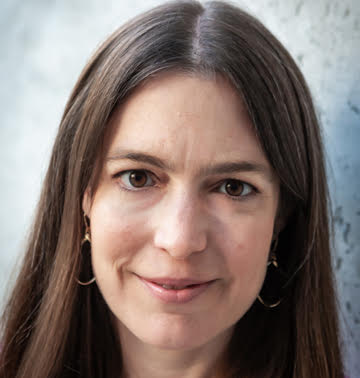
One of the perks of attending the Barrelhouse Conversations & Connections: Practical Advice on Writing yearly conference held at my alma mater, American University, in Washington, D.C., has been meeting and interacting with so many authors who are also educators.
That has led to my blog post interviews during the past couple of years with people who have been/are affiliated with AU: David Keplinger, Melissa Scholes Young, Andrew Bertaina, and now Sandra Beasley.
Although I had met Sandra and saw her on panels in earlier years, I attended her 2026 Barrelhouse craft workshop Lyric A-Z Exploring Abecederians in Nonfiction, which I found quite enlightening and introduced me to the somewhat quirky literary concept of Abecedarians.
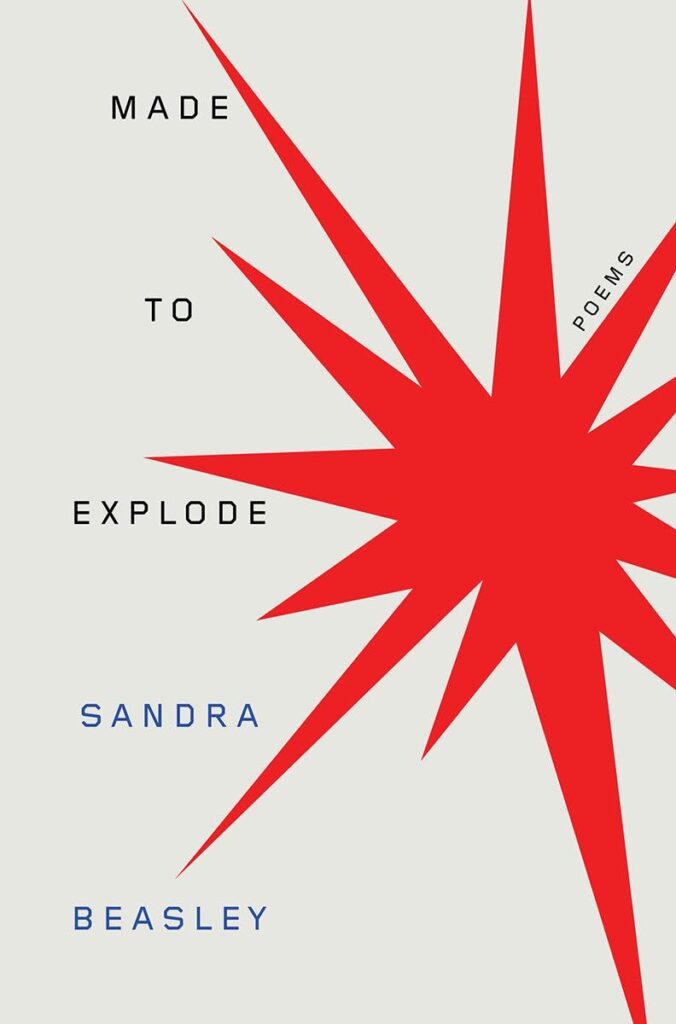
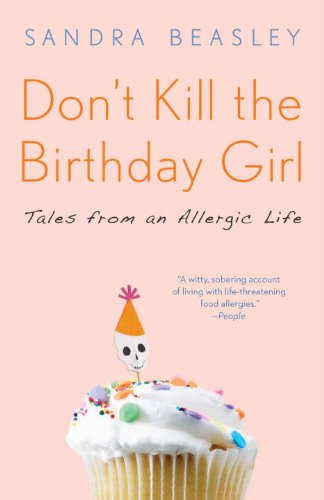
Sandra has developed a varied career as an author, poet, and educator. Her 2021 poetry collection Made to Explode, published by W.W. Norton & Company, won the Housatonic Book Award for poetry the following year. Don’t Kill the Birthday Girl: Tales from an Allergic Life, a “memoir of living with disability and a cultural history of food allergy,” was published by Crown in 2011 and reviewed in such varied outlets as The Washington Post, People, and Prevention.
She is also a poetry editor, visiting writer-in-residence and professor, and teacher in a variety of settings. And she is sufficiently well-known to be profiled on the websites of The Poetry Foundation, and the Academy of American Poets.
I’m grateful to Sandra for answering my questions about her writing, editing, and teaching career; and her literary community activities in the DC area and elsewhere.
You are quite prolific, in a number of genres. For time management reasons or otherwise, do you divide your time around certain types of writing (and editing), as well as your time spent teaching about these genres?
I do not abide by a particular writing schedule. I draft and revise in intense spurts and can go months without producing new work, which isn’t usually affirmed as professional best practices but is important to offer up as an example. I’m wary of systems that suggest participatory rigor is the only way to “prove” you’re truly a writer, which will often exclude those living with disability, caregiving duties, or economic constraints.
That said, I absolutely lean into one genre at a time in terms of my reading and writing and, to the extent that I’m able, my teaching. Right now, I’m reading a lot of memoir that centers on the dynamics around food and drink, which in my case leads to thinking about food allergy and other dietary conditions as well.
My editing duties these days focus exclusively on poetry. I delight in the way that strengthens my tether to the genre that made me a writer and allows me to pay it forward to poets looking for a break. I edit the monthly “Poetic Hill” for the Hill Rag, which gives me a chance to showcase DC-local poets. I serve as the poetry editor for Gravy, the quarterly journal of the Southern Foodways Alliance, which nourishes my regional affiliation as a Virginia-born Southern writer. And I work with the team at Blair, a nonprofit literary publisher based in North Carolina, on the Carolina Wren Poetry Prize and their larger poetry series, typically two collections each year.
In 2012, you wrote the following in The Washington Post: “I make a living on the road; in less than 12 months, I’ve put 30,000 miles on my car.” Is this still the case, especially as it relates to teaching, conferences, and other aspects of being part of a literary community?
I traveled pretty aggressively for about a decade! “Aggressively” feels the like the right word to use here because I loved it, but it took tremendous willpower and was sometimes hard on my body and heart. Count the Waves, my 2015 collection, is very much about what is discovered and revealed across long distances.
What made that logistically possible was some larger writing contracts, including my memoir deal with Crown and some freelance for the New York Times Magazine, a handful of academic visiting writer positions that typically lasted 1-3 months, and teaching with the University of Tampa low-residency MFA program. I was constantly developing classes and craft lectures that related to the themes in my own work. And the whole time, DC stayed my steady home—which meant a lot to me in terms of having an anchoring personal and literary community that I could return to, even if just for a few days at a time. My family and my now-husband were also crucial supports.
I came into 2020 already thinking about winding down my travels. Then the University of Tampa’s program closed suddenly and, of course, we entered a pandemic that felt like it changed everything. I published Made to Explode in 2021, and in a different version of the universe that would have kick-started road trips again. But it wasn’t meant to be.
I was intrigued to see your work on the website of ATD/Association of Talent Development. There was also an excerpt from your memoir in The Wall Street Journal, and one of your poems is titled “Vocation.” Is there an organizational, or business, component to your writing/editing that is perhaps not as well-known as your poetry and other literary work?
Writing creatively should always feel like a calling of sorts. Ideally, we wouldn’t publish books just to extend a brand or satisfy a tenure clock. That said, I’ve always appreciated people who could layer the genuine fluctuations and inspirations of artmaking under a practical or even strategic approach to making a living in the world as an artist. I always joke that I’m product of a marriage between a painter and an Army general, but that’s also literally true, and my mindset reflects both temperaments.
In 2022, a medical crisis in our household meant I had to suddenly step away from my teaching contracts—which required time and space commitment beyond what I could offer, and, frankly, for too little money. But I still needed an income. I ended up working with a fantastic consulting group that specializes in “sales acceleration,” and has its origins in a shared experience of attending the same high school for science and technology. The work was entirely remote, schedulable at will, and exciting.
Part of my responsibilities included authoring posts for an in-house blog, and that’s what you found on the ATD site. I’ll always be deeply grateful for that experience. The people who brought me on board are brilliant, humane and good-humored, and I’d be happy to work with them again. I also got over any posturing over making a home in the “nonprofit” versus “for-profit” world. It’s just one big world that we’re sharing.