
I am following up my May 11, 2026 blog post about the Spring 2026 issue of Leader to Leader, where I am managing editor, with this post about our Summer 2026 Issue 121. As in the previous and earlier posts, I’ve included links to all of the articles, including two at the end from our ‘From the Front Lines’ section based on our interviews with some of today’s most important researchers.
This post also includes the two articles from Leader to Leader’s section ‘Bright Future: Viewpoints From Tomorrow’s Leaders,’ which made its debut in the Winter 2026 issue. The section continues to showcase the writing of young leaders, ages approximately 30 and younger; the Summer 2026 authors are Max Polec and Vidya Surti.
And I am looking forward to writing a future post about our Fall 2026 issue 122, marking our 30th anniversary. The issue publishes soon, and we hope you’ll agree it reflects the ongoing excellence of the publication that Frances Hesselbein created in 1996, and nurtured and grew until her death at the age of 107 in 2022. In the meantime, I hope you find the articles in the Summer 2026 issue to be useful and valuable!
Staying True to Our Values
Author/Columnist: Sarah McArthur
Article: ““She Never Broke a Promise””
Sample quote:
Frances {Hesselbein} was clear that we cannot stay true to our values if we allow external pressures to define our purpose. When we shift our words, our work, our mission to secure support, our intention changes and so does the impact of what we are doing.
Each time we acquiesce, even with good intentions, we move further away from our commitment, from our promise. Over time, these small shifts reshape not just individual missions, but the character of our broader society.
A Wide Range of Experiences, Views, and Beliefs
Authors: Cornelia Choe and Marshall Goldsmith
Article: “The Power of Panoramic Leadership in a Fast-Changing World”
Sample quote:
In panoramic leadership, relationships create strategic infrastructure. Every stakeholder connection you make increases the breadth of your vision.
Yet leaders, like all human beings, can allow overwhelm, uncertainty, and fear to shut them off from the full range of stakeholder perspectives, situations, and challenges they need to understand better. And the older and more experienced we become, the less likely we are to make a conscious effort to seek out new perspectives, relying instead on fixed, established maps. As a result, we miss out on the wide range of experiences, views, and beliefs that could improve our decisions and strategies.
The Need For Profound Depth and Transcendent Reach
Author: Douglas R. Conant
Sample quote:
Above all else, ‘Higher Ground’ leadership is predicated on two simple needs: The need for profound depth and transcendent reach. We must dig deep to build an unshakeable foundation that supports our lofty ambitions for ourselves, our organizations, our communities, and our world. The deeper our self-knowledge, the more expansive our reach.
The goal is to generate impact that reaches across people, time, and space. With the right tools and systems, we can create the conditions for enduring reach that extends past the narrow frame of the present moment and into the vast unknown of the future. We can reach past the four walls of our own experiences and into the hearts and minds of the people we’re leading.
Fiction Lets us See the World More Clearly
Author: Jyoti Guptara
Article: “What Leaders Can Learn from Great Fiction”
Sample quote:
Fiction doesn’t just take us out of the world; it lets us see it more clearly – “to hold, as ‘twere, the mirror up to nature,” as Shakespeare put it in Hamlet. I used this quote in hundreds of book readings, when I published my first fantasy novel at the age of 17, to promote not just reading but the reading of fantasy fiction (still frowned upon by intellectuals at the time).
This perspective was why Kofi Annan, former Secretary-General of the United Nations, invited me to speak at his Global Humanitarian Forum on “Escapism in Fiction, Economics and Education.” Many of the systems we take for granted, from the economy to management models, are constructed narratives, fictions agreed upon. As The Lord of the Rings author and Oxford professor J.R.R. Tolkien argued in his essay “On Fairy-Stories,” the only people who object to escapism are the jailers!
A Developmental Journey Shaped by Context
Author: Sandra Kenoff
Article: “The Power of Integrative Leadership: Expanding How Leaders Define Value and Responsibility”
Sample quote:
Institutional contexts shape leaders through their structures of accountability, their definitions of value, and their expectations of responsibility. Corporate environments cultivate clarity about strategy, prioritization, and execution. Public institutions cultivate stewardship, continuity, and accountability to the communities they serve. Educational and healthcare institutions cultivate expertise, care, and professional standards. Philanthropy fosters trust, relationships, and long-term social investment. Each of these orientations contributes something essential to leadership. None of them on its own is sufficient for the realities leaders now face.
Taken together, these domains reveal that leadership is not a fixed role but a developmental journey shaped by context. What leaders come to value, notice, reward, and protect is influenced by the systems in which they operate.
Deliberate Awareness and Intentionality
Authors: Raj Sisodia and Nilima Bhat
Article: “Living and Leading Consciously: Leadership as an Expression of Purpose and Values”
Sample quote:
Most human actions stem from unconscious patterns, reactions, and habits, some of which can be described as compulsions. When we live compulsively, we’re driven by habitual responses, cravings, fears, and desires that often lie below the surface of our awareness. We react automatically to situations rather than responding mindfully. Living compulsively means being enslaved by our own mind, body, and emotions, bound by old conditioning and unchecked urges.
In contrast, living consciously is about moving through life with deliberate awareness and intentionality. It involves cultivating a higher level of self-awareness, where we are fully present in each moment, able to observe our thoughts, emotions, and actions without being controlled by them.
A Deep Well of Human Motivation
Author: Dontá Wilson
Article: “Where Purpose Leads, Performance Follows”
Sample quote:
Servant leadership flips the script from me to we. It asks: How do I elevate those around me? How do I create an environment where others can succeed? When leaders focus on serving others first, they discover that performance is not diminished. It’s multiplied. When you become a servant leader, they’re not on your team; you’re on their team.
Think about it: numbers may measure results, but people deliver them. If people feel seen, understood, supported, and inspired, they give more of themselves. When they feel used, ignored, or disposable, they withdraw. Servant leadership, grounded in purpose, taps into that deep well of human motivation that no metric alone can access.
Moments of Awe
Author: Mette Norgaard
Article: “Leading With Aliveness: Enduring Principles and Embodied Practice”
Sample quote:
We touch into the universal in moments of awe, according to Dacher Keltner, professor of psychology at the University of California, Berkeley, and across the world we express it in chills and tears, and with the sounds of wonder (i.e., ooohs, aaahs, and whoas). In all cultures, we are moved by the wonder of the natural world and the moral beauty of others. By making music and mourning together. By a newborn’s first cry and the dying’s last breath. We sense the spirit, and here I use the word in its original sense. In Latin, spiritus simply means the breath, animating principle, or life force—the essence of the Aliveness Effect.
Creating a CEO Framework
Author: Udo Lange
Article: “The “Circus CEO Framework”: Focusing Time and Channeling Energy in Multiple Dimensions”
Sample quote:
Six years ago, when I became a divisional CEO at FedEx to run FedEx Logistics, I wanted to get a head start and looked for what CEOs should do. I found a lot of good books from successful CEOs telling their story, but not a single one then that had a good framework, so I created my own. (CEO Excellence: The Six Mindsets That Distinguish the Best Leaders from the Rest, by McKinsey’s Carolyn Dewar, Scott Keller, and Vikram Malhotra, started to fill this void later.) As a chief operating officer/COO for 5 years, I learned later at Harvard Business School’s Advanced Management Program that my model was too operational and needed to become more strategic.
Since then, it has gone through a few revisions and is now in a stable state to guide me in my role of leading the Oslo Stock Exchange-listed conglomerate Stolt-Nielsen as the first non-family CEO after 64 years.
An Irreplaceable and Meaningful Presence
Author: Makiko Hirano
Article: “The Sustainable Mind of Leadership: From Self-Existence Awareness to Collective Flourishing”
Sample quote:
At the heart of MBDGs is what I refer to as self-existence awareness—a pre-evaluative sense of one’s value grounded in existence itself. In Japanese educational and psychological contexts, a closely related idea is discussed under the term jiko sonzaikan (自己存在感), which refers to the felt sense of being an irreplaceable and meaningful presence. Among existing psychological concepts, this is closest to a sense of inherent worth, though it is not fully captured by any single established term. Unlike self-awareness, which focuses on observing and evaluating one’s thoughts, emotions, and behaviors, self-existence awareness refers to the inner condition that precedes evaluation or comparison.
Self-existence awareness is the difference between believing “I am valuable because I can do something” and recognizing “I may not fully understand why, but my existence itself has value.”
Making Change Real, Meaningful, and Lasting
Author: Will Linssen
Article: “The Triple Win of Better Leaders, Better Teams, and Better Results“
Sample quote:
If leadership development is meant to improve leaders, teams, and ultimately results, then measuring all three matters. So does understanding how they influence one another. This article explores those connections and the coaching design that makes them possible.
That’s what gave rise to the Triple Win approach, a coaching philosophy and process we built at Global Coach Group to make leadership change visible in the workplace. Not as a one-time feedback event, but as an ongoing partnership where leaders, coaches, and coworkers all play a role in making change real, meaningful, and lasting.
Lived, Observed, and Research-Based Experience
Author: Lin Lim
Article: “Parenting as Leadership: What Authority Requires When People Are Still Becoming”
Sample quote:
Parenting exposes leadership in its most demanding form, not because it is unique, but because it removes many of the buffers that organizations rely on to obscure authority. Authority must be exercised daily under emotional intensity, incomplete information, and long time horizons. Relationships cannot be exited. Feedback is slow and ambiguous. Success is not compliance or short-term performance, but the capacity a person carries forward into adulthood.
This framing emerged at the intersection of my work across business leadership, education, and parenting, informed by lived, observed, and research-based experience across multiple cultural contexts and over time. Having worked with leaders, educators, and families in Asia and across the United States, I have been studying a recurring question: under what conditions does authority strengthen human capacity over time, and under what conditions does it narrow it. Across sectors and cultures, the same breakdowns appeared when authority was exercised under pressure for efficiency, especially when those being led were still developing.
Purpose, Autonomy, Mastery, and Connection
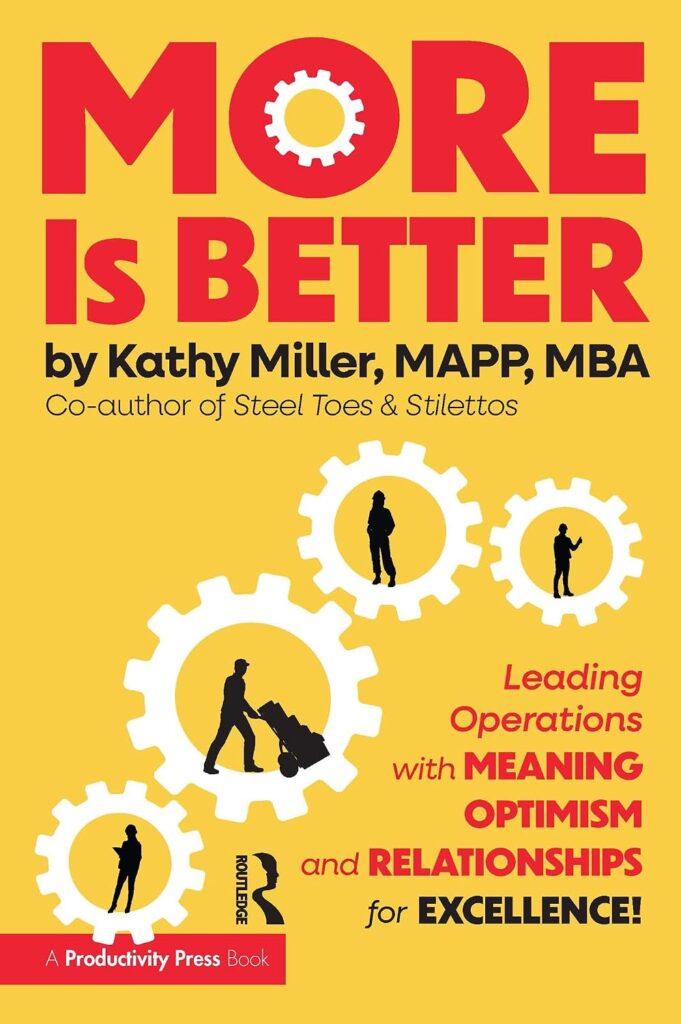
Author: Kathy Miller
Article: “Keeping Work Meaningful When Technology Changes Everything”
Sample quote:
Motivation researchers Richard Ryan and Edward Deci have shown for decades that people thrive when autonomy, competence, and relatedness are supported.
In my experience, meaningful work rests on four drivers: purpose, autonomy, mastery, and connection. Purpose belongs in the same conversation, because it keeps the “why” visible when roles change. Purpose is the sense that the work matters. Autonomy is the agency to use judgment in how the work gets done. Mastery is the experience of getting better and growing. Connection is the feeling that you belong to something bigger than yourself. Digital tools can strengthen each of these drivers, and they can weaken them quickly if leaders focus only on mechanics and enforcement.
Every Negotiation Begins Internally
Author: Greg Williams
Article: “The Negotiating Leader: How Awareness, Integration, and Timing Shape Outcomes”
Sample quote:
Every negotiation begins internally. Before leaders engage with others, they negotiate with themselves. They weigh confidence against caution, authority against collaboration, speed against accuracy, and ego against outcome. These internal negotiations influence how leaders present themselves in every interaction.
Internal negotiation influences how leaders listen, frame questions, tolerate ambiguity, and respond under pressure. When leaders lack awareness of this internal process, emotional reactions are easily mistaken for rational judgment. Stress may appear as urgency. Fear may disguise itself as prudence. A leader’s ego may present itself as conviction.
Learn Faster and Perform Faster
Author: Rebecca Homkes
Article: “Chaos Has a Cost: How Leaders Can Avoid Paying It”
Sample quote:
The biggest differentiator of high-performing organizations is learning velocity: those that learn faster are those that perform faster. Periods of extreme volatility are amazing times to perform as they are incredible times to learn. Customers are going to be super clear on what matters the most; consumers will stop trying anything and focus on what they need; partners and vendors will be the most honest about what they value, and employees will as well. Taking advantage of learning faster to grow faster demands a shift in leaders. The critical connection between strategy, execution, and learning velocity is learning loops. Learning loops are specific, iterative cycles of forming hypotheses, testing, learning, understanding, analyzing, and applying various forms of knowledge. Accelerating learning velocity comes from identifying the most critical loops, removing friction, shortening them and increasing the velocity that team members traverse them.
One of the Largest Untapped Reservoirs of Capital
Author: Donovan Pyle
Sample quote:
Healthcare—often the second or third largest expense for any organization—offers a rare anomaly in the business world. It is one of the few places where the interests of the shareholder and the employee are not competing; they are perfectly aligned.
It also represents one of the largest untapped reservoirs of capital in the modern enterprise. While most leaders have squeezed every ounce of efficiency out of operations and information technology/IT, healthcare remains a bloated anomaly. In aggregate, this inefficiency represents a $300 billion annual opportunity for U.S. businesses.
This is a chance to reclaim millions in lost profit without selling a single additional unit, all while lowering the cost of living for your workforce.
Psychological and Relational Homeostasis
Author: Chrisa Zindros
Article: “Leading Under Pressure: Attachment, Regulation, and the Inner Work of Leadership in a VUCA World”
Sample quote:
During sustained pressure, leaders do not operate solely from their most reflective or deliberate selves; they are human first. The nervous system responds to uncertainty and perceived threat by narrowing focus and reaching for what feels familiar and protective. In these moments, leadership behavior, and human behavior in general, is instinctive and often unconscious. Left unexamined, these responses can quietly erode trust, strain relationships, and destabilize teams.
Yet when leaders understand their ingrained inclinations and learn to regulate themselves back toward psychological and relational homeostasis, they can meaningfully mitigate these risks. By stabilizing instinctual responses in moments of pressure, leaders are better able to sustain trust, preserve rapport, maintain open lines of communication, and consistently enact the values and behaviors they work so intentionally to cultivate.
The Information Asymmetry Has Disappeared
Author: Jeff Seeley
Article: “Leadership in the Algorithm Age”
Sample quote:
The information asymmetry that once allowed a leader to dominate a conversation—and an organization—has disappeared. Yet no matter how much information we have, we are still drawn to those who awaken a sense of purpose within us.
People still seek meaning. They still look for respect and trust. They still prefer to connect with someone who truly believes in what they’re doing. This state of affairs reflects a challenge for leaders in the age of algorithms—and a tremendous opportunity for those who understand that awakening the individual’s “Why” is now essential.
Bright Future: Viewpoints from Tomorrow’s Leaders
Building a Shared Definition
Author: Max Polec
Article: “Change the Lyrics: How Leaders Can Bridge the Generational Divide”
Sample quote:
Every time I meet a new group of leaders, I start by building a shared definition. I recently coached a small group of Gen Z startup founders building in the robotics industry. When I asked them how they defined business strategy, their answer was not what you would have read in a Peter Drucker book. I met them where they were and then, bit by bit, connected the dots to expand that shared definition into something we could all work from.
This is where cross-generational collaboration breaks down most often. People use the same words to mean different things and never pause to check. Shared definitions create shared ground. Without them, alignment is an illusion.
Examining Assumptions About Participation
Author: Vidya Surti
Article: “Designing New Forms of Leadership Accessibility and Inclusion”
Sample quote:
Organizations rarely examine their assumptions about participation before people are required to depend on them. Governance structures are often built on optimistic expectations about health, availability, and endurance. When those expectations fail, individuals with disabilities are expected to simply catch up and compensate for lack of true accommodations being available.
In nonprofit leadership, this shapes who remains on boards, whose voices influence strategy, and whose expertise is lost. When systems cannot flex, organizations experience turnover, burnout, and shallow diversity without recognizing access as the underlying issue.
From the Front Lines
Instrumental, Friendly, Ideological, and Genuine
Article: “Performing Stewardship With a Concrete Duty to Care”
Sample quote from Marco Visentin, Department of Management, University of Bologna, Bologna, Italy:
Traditionally, both management theory and managerial practice have largely assumed that managers act as agents of the firm, focusing on potential conflicts between their self-interest and that of shareholders, while largely overlooking the broader impact of business activities on society and the environment; by contrast, stewardship theory suggests that managers may instead act out of a “duty to care” toward a valued external cause or mission, guiding their behavior beyond short-term self-interest and toward the protection or advancement of something perceived as worthy. The central contribution of our work is the concept of the stewardship mind, a mental framework in which organizational actors experience a genuine moral duty to care for people and things they perceive as valuable—such as employees, the natural environment, or future generations. We conceptualize this mindset through a taxonomy of four distinct types—instrumental, friendly, ideological, and genuine—distinguished by the nature of the duty to care and by the psychological currencies that sustain a leader’s commitment. These currencies span a continuum ranging from external incentives, such as financial rewards and social recognition, to deeply internalized personal values and moral convictions.
Trained to Understand the Macro and the Micro
Article: “The Importance of Attunement For Organizational Health and Wellbeing”
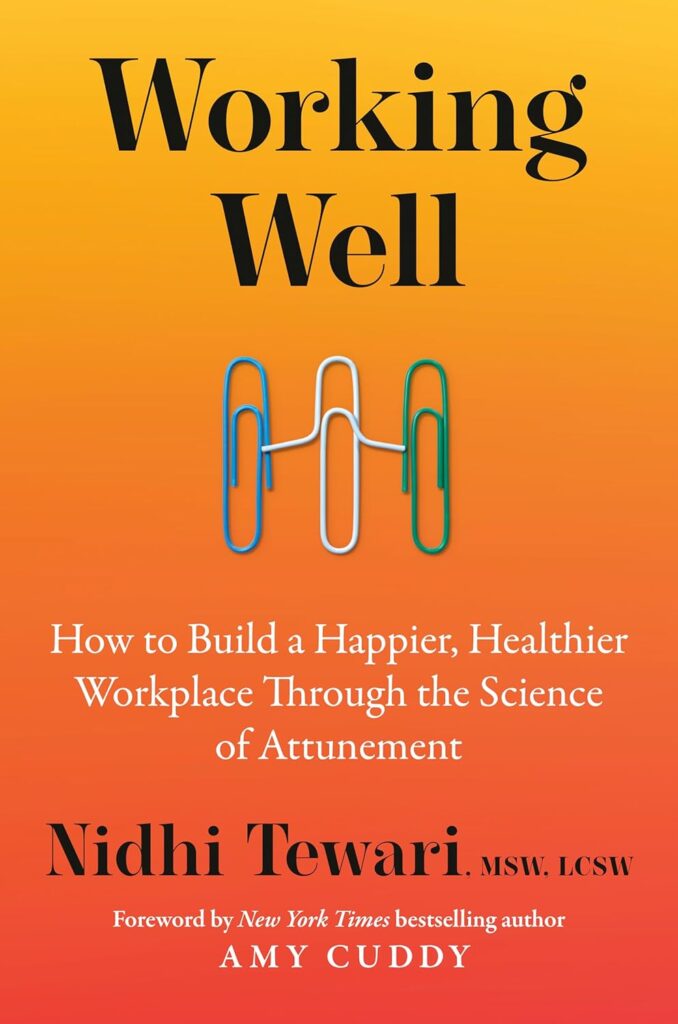
Sample quote from Nidhi Tewari, LCSW, author of Working Well: How to Build a Happier, Healthier Workplace Through the Science of Attunement:
Part of what differentiates me in my work with corporations is that my education as a Licensed Clinical Social Worker (LCSW) teaches me how to effectively navigate the intersection of human behavior, organizational systems, and change management. LCSWs are trained to understand the macro and the micro, to address relational dynamics, to examine the person and their mental and physical health in the context of their environment, and to work within systems to facilitate change at all levels. Not everyone has to be an LCSW to be a change agent, but they do have to strengthen this intersectional muscle.