My yearly post about the life and ongoing influence of the Argentine writer Jorge Luis Borges comes two days after the 127th anniversary of his birth, and forty years after his death in June, 1986.
In last year’s post I noted that a film was being made in Scotland based on Jay Parini’s (somewhat fictionalized) 2020 memoir, Borges and Me: An Encounter. (Although I have never met him, Parini and I were both born a few years apart in Scranton, Pennsylvania.) I was pleased to read that Borges and Me was recently shown at the Edinburgh Film Festival, and favorably reviewed by Peter Bradshaw in The Guardian. Pauline McLean’s BBC piece on the film includes interviews with Parini and director Marc Turtletaub.
On July 24, Leo Barraclough reported in Variety that “Luxbox Acquires Documentary ‘Life of Jorge Luis Borges’ Ahead of Venice Premiere.” The article begins: “Luxbox Films has acquired the world sales rights to Mariano Llinás‘ epic five-and-a-half -hour documentary “Life of Jorge Luis Borges,” which will world premiere at the Venice Film Festival in the Open – Non-Fiction section.”
After Venice, the documentary will have its North American premiere on September 14 at the Toronto International Film Festival. According to the TIFF, “Itself deeply Borgesian — full of adventure, curiosity, creativity, and mystery — Life of Jorge Luis Borges is one of the year’s great documentaries that — appropriately — blurs the line between the real and the invented.”
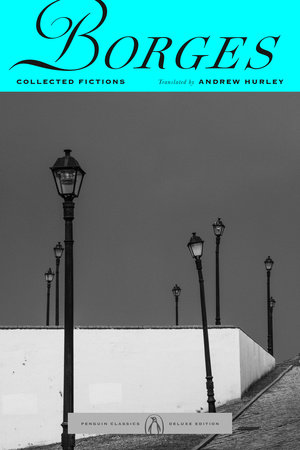
Before leaving the world of films, and given the recent notoriety of director Christopher Nolan’s The Odyssey, I enjoyed Witney Seibold’s August 9 SlashFilm article “Christopher Nolan Has A Book Recommendation That’ll Completely Melt Your Mind.” Regarding Nolan’s 2018 appearance on the BBC’s Desert Island Discs: “The desert island game is always fun,” Seibold writes, “and the BBC had a few rules for Christopher Nolan to follow. On his desert island, he was allowed to bring three books. The Bible, the complete works of William Shakespeare (the two most common answers), and a third book of his choice. Nolan said that he wanted to cheat a little bit and throw in the double volumes of Jorge Luis Borges’ “Collected Fictions” and “Selected Non-Fictions.””
The continued relevance of Borges’ life and work has long fascinated me. His influence will only grow in the years ahead. A recent example is Javier Lorca’s June 15 EL PAÍS USA Edition article “Jorge Luis Borges, the writer’s endless reinvention 40 years after his death.” Among other topics, Lorca details the various events in Buenos Aires at the time, commemorating the anniversary of Borges’ death.
In the June 16 UChicago News post “What to read during summer 2026,” Fernando Alvarez, The Charles F. Gray Distinguished Service Professor in Economics and the College, the Kenneth C. Griffin Department of Economics, University of Chicago; recommends the short story “Funes the Memorious,” from Borges’ collection Ficciones. “Understanding,” Professor Alvarez writes, “means learning what to abstract from, what to simplify, and what to leave out.”
Earlier this year, the Five Books post “Retellings of Shakespeare recommended by Sally O’Reilly” spotlights five books, beginning with Maggie O’Farrell’s Hamnet. The fifth choice is Borges’ collection Labyrinths, which includes “Everything and Nothing.” O’Reilly also points to “Shakespeare’s Memory,” in the 1975 collection The Book of Sand. In her interview response, O’Reilly writes of Borges and “… the extraordinary in the ordinary—that somebody who is not exceptional in their personal qualities or life experience can still be somebody who produces something extraordinary. And how that happens is a mystery. And I think he does that brilliantly.”
Finally, on a more personal note, I recently discovered something poignant that I did not know about at the time it was written, in 2022, by Raymond Maxwell, a student of mine in the Summer 2014 semester of the Special Libraries and Information Centers class I taught at The Catholic University of America Department of Information Sciences.
Last December, I was shocked to learn of Raymond’s death. Among a great many interests and pursuits in his life, Raymond was an expert on the late playwright August Wilson, and led a study group on his work.
What I did not learn until preparing for this post was that on September 7, 2022, he recommended to his group to check out my Borges related post of September 1: “One of my former professors, Bruce Rosenstein, has put together a 12-week self-study curriculum on the work of Argentinian writer/philosopher/librarian Jorge Luis Borges. Borges was an influence on many American writers, including August Wilson, who cites Borges as one of his four primary influences and is credited with the invention of “magical realism” in modern fiction. Consider it an opportunity to examine connections in Borges’ work that may have influenced August Wilson.”
I wish I could thank Raymond for that post, and perhaps in an alternate Borgesian universe, I’ll one day have the opportunity. In the meantime, I look forward to seeing both of the Borges films, and await the unfolding of more Borges scholarship and activities in the year ahead.