On October 27, Leader to Leader, the quarterly journal where I am managing editor, celebrated 30 years of publication with a global online event moderated by our editor-in-chief, Sarah McArthur. The event further celebrated our special 30th anniversary, Fall 2026 issue number 122, in which we invited authors who have written for us over the years to contribute new articles looking at how leadership has changed during the past 30 years, and what further changes they foresee for the future.
Many of the articles reference the contributions of our founder and longtime editor-in-chief, Frances Hesselbein, who passed away in 2022 at age 107, and whose spirit continues to guide all of us at the journal. In this post, as I did for the Summer 2026 issue and earlier ones, I include links to the issue’s articles, including two at the end from our ‘From the Front Lines’ section based on our interviews with some of today’s most important researchers.
This post also includes the three articles from Leader to Leader’s section ‘Bright Future: Viewpoints From Tomorrow’s Leaders,’ which made its debut in the Winter 2026 issue.
I hope these articles and takeaways energize and enlarge your thinking about the many facets of leadership in a time of great change.
Holding Steadfast to Frances Hesselbein’s Vision
Author/Columnist: Sarah McArthur
Article: “The Little Engine that Could”
Sample quote:
For 30 years, Leader to Leader has held steadfast to Frances’s {Frances Hesselbein’s} vision to invite “highly respected leaders from private, public, and social sector enterprises to converse with like-minded leaders who want to make a difference.”
Anyone who knew Frances and visited her office at 320 Park Avenue in New York City was given a little blue folder with the latest happenings, events, and programs of the Leader to Leader Institute/Frances Hesselbein Leadership Forum, always with the latest issue of Leader to Leader prominently placed in the right-side pocket.
The Context For Leadership Has Changed
Authors: Alan Mulally, Sarah McArthur, and Marshall Goldsmith
Article: “The Evolution to Our “Working Together”™ Stakeholder Centered Leadership, Management, and Coaching”
Sample quote:
Over the past 30 years, the context for leadership has changed.
In the past, leaders were expected to know more than the people they led. Organizations were more locally focused, technology changed slowly, and roles were clearly defined. Leadership was often hierarchical, directive, and centered on control.
We now operate in a global and interconnected environment that is characterized by rapid technological change, increasing complexity, and a workforce of highly skilled and educated knowledge professionals. In fact, in many cases, the people doing the work know more about their areas of expertise than their leaders do.
This shift requires a different approach to leadership.
Leading a Shift in Focus
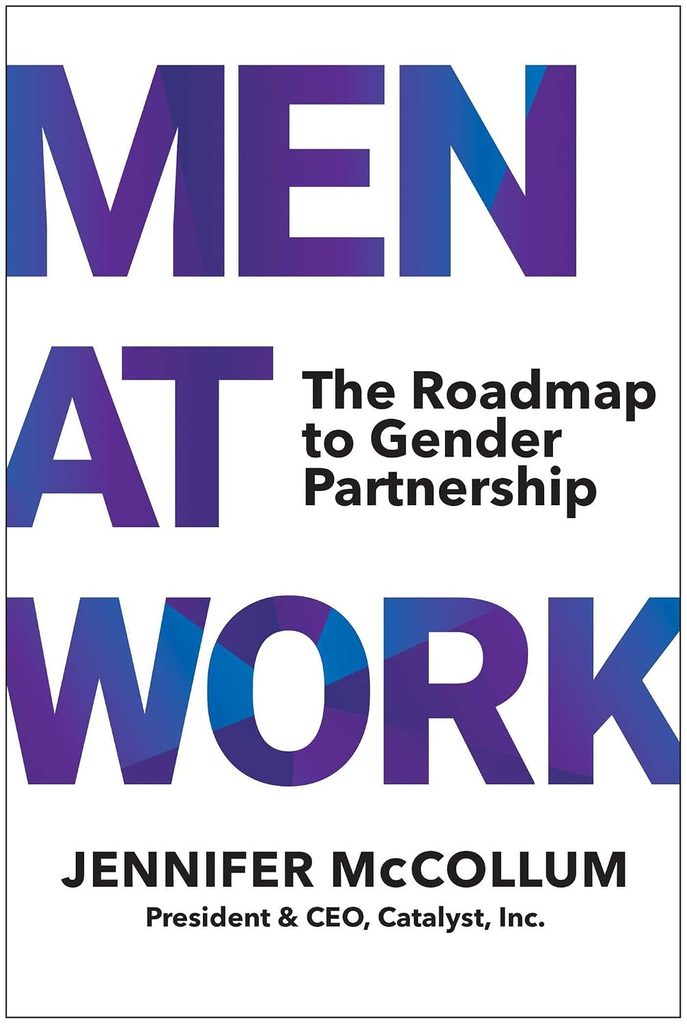
Author: Jennifer McCollum
Article: “Why the Future of Leadership Depends on Gender Partnership”
Sample quote:
When Catalyst was founded in 1962, the challenge was straightforward because the barriers were explicit. Women were actively excluded from large portions of the workforce. Job ads were segregated by gender. It was legal to pay women less for the same role. Leadership strategies focused on helping individual women enter, stay, and succeed at work, in those limited roles.
By the 1980s and 1990s—around the time Leader to Leader launched—Catalyst had led a shift in focus toward women’s representation in management, executive roles, and boardrooms. Research centered on pipelines, and barriers to advancement. The prevailing assumption was that if organizations trained, mentored, and sponsored women effectively enough, progress would naturally follow. The focus was on the women themselves.
Embracing Human Capital Innovation
Author: Angela Jackson
Article: “Catalysts for Growth: Innovating Human Capital for Today’s Knowledge Economy”
Sample quote:
Forward-thinking companies are embracing human capital innovation to prepare employees for the future. Intel’s $100 million investment in Ohio’s education system as a way of building the company’s talent bench is a prime example. In central Ohio, Intel maintains a Semiconductor Education and Research Program that helps individuals transition into high-demand STEM careers. The company also put $20 billion into building two cutting-edge chip factories in Licking County, Ohio and simultaneously undertook a $100-million partnership with local schools and community colleges, to create a sustainable talent pipeline aligned with the demands of its new chip manufacturing facilities. This approach not only addresses current workforce needs but also builds a foundation for long-term success.
The Most Meaningful Accomplishments are Rarely Individual
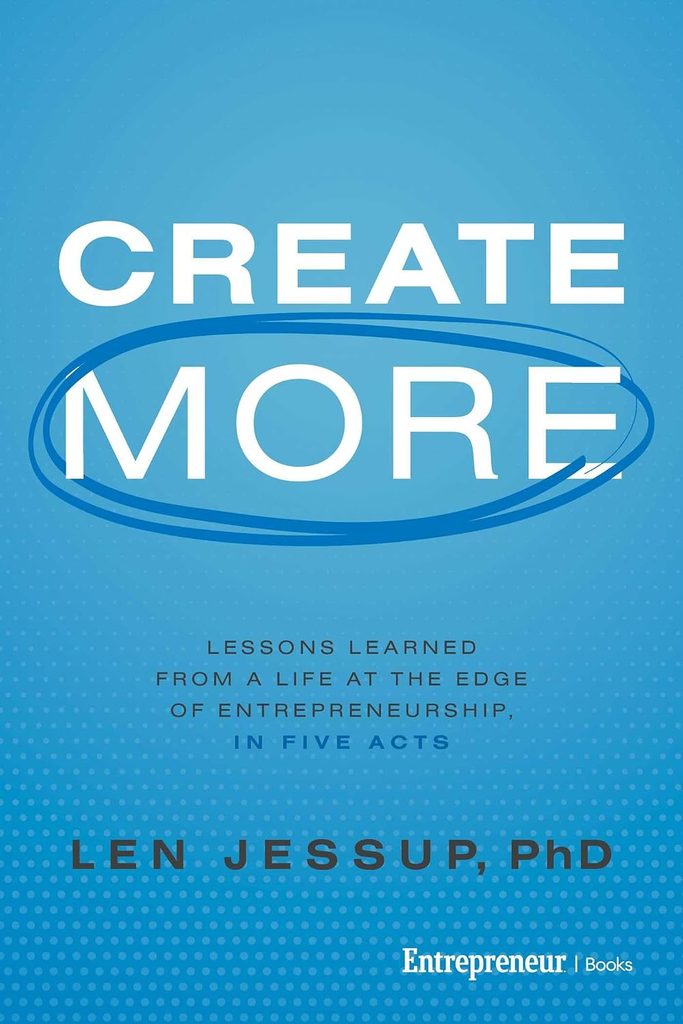
Author: Len Jessup
Article: “The Entrepreneurial Leader: From Control to Creation”
Sample quote:
Entrepreneurship has often been associated with individual achievement. Increasingly, I believe the more important measure is collective contribution. In my own work, I have found that the most meaningful accomplishments are rarely individual. They are the result of teams of people working together, building on each other’s ideas, and supporting one another along the way.
Entrepreneurial leaders reinforce this by sharing credit, investing in others, and focusing on what the group can accomplish together. This not only strengthens the organization, but also builds a culture where people are more willing to contribute and engage.
A Cross-Sector, Multi-Stakeholder Coalition
Author: Rosabeth Moss Kanter
Article: “The Necessity and Essence of Advanced Leadership”
Sample quote:
The playing field for advanced leaders is not a single organization but a cross-sector, multi-stakeholder coalition. This organizational form is bigger than familiar public-private partnerships. It can encompass many independent actors with divergent interests but a willingness to join the coalition because of belief in its goals and the possibility of having some of its own interests reflected in those goals. There might be formal agreements, such as NATO membership standards for this alliance of nations, or there might be loose understandings and ad hoc membership, such as the way that neighborhood associations invite wide participation of constituent groups aligned with their mission. In short, advanced leaders must get many disparate, otherwise-independent actors to the table.
The Growth of Coaching Has Been Staggering
Author: Tom Kolditz
Article: “The Pathway to Change in Leadership”
Sample quote:
Coaching started out as a corrective, remedial tool for executives, but later became a proactive leadership development strategy, focusing on emotional intelligence and 360-degree feedback. It transitioned from fixing ineffective leaders to a focus on leadership growth among the very best. It was solidified by the founding of the International Coaching Federation (ICF) in 1995, just a year before Leader to Leader began.
The growth of coaching has been staggering. The certified ICF coaches exceed 50,000 in more than 140 countries, and that’s just one coach training company. Virtually all CEOs have a coach or coaches at some point. In the past 10 years, the Ann and John Doerr Institute for New Leaders at Rice University has trained more than 500 professional coaches, and has coached more than 7,000 graduate and undergraduate students. In the formal measurement of leader development effects, coaching is the most powerful leader development tool that there is.
Leadership Will Always be a Human Skill
Author: Suzie Bishop
Article: “Caring: The Heart of the Situational Leadership® Model”
Sample quote:
As someone who works in the leadership development industry, I’ve seen many leadership trends come and go. Right now we’re facing questions about the future of AI in the workforce and the impact that will have on leadership. But the more I learn about AI, the less afraid I am about the future of leaders. Because leadership will always be a human skill. Caring for others will never be a mere trend in leadership. It is the first step in making the match. No matter how much the landscape of work changes, there will always be leaders; there will always be performers; there will always be tasks.

Shifting From Knowing to Discovering
Author: Marshall Goldsmith
Article: “The Leader of the Future”
Sample quote:
In the past, successful leaders were rewarded for being right. Their identity was tied to expertise and judgment. Letting go of this identity can be very difficult.
There is also a behavioral trap. Leaders may say they value learning, yet still interrupt, add too much value, or move too quickly to their own conclusions. This well-intended desire to help can unintentionally shut down input from others.
The challenge will not be understanding the need to learn. The challenge will be shifting from knowing the answer to discovering the answer.
Transferability Goes Beyond Mapping Similarities
Author: Hamilton Mann
Article: “Transferability: An Enduring Leadership Skill in the Age of Intelligence Transformation”
Sample quote:
Transferability may prove to be a more durable human differentiator than any other skill commonly cited as essential for the future. Artificial intelligence can be trained on vast datasets to perform within defined domains. It can even simulate cross-domain reasoning by identifying statistical correlations between fields.
But transferability, in the human sense, goes beyond mapping similarities. It is about sensing structural equivalence where none is explicitly defined, such as recognizing that the way tension resolves in music may illuminate how conflict resolves in organizations, even when no dataset explicitly encodes that analogy.
Leadership Practices Evolve Based on Changing Times
Author: Dave Ulrich
Article: “Timeless Leadership Principles and Timely Leadership Practices”
Sample quote:
I vividly recall Peter Drucker saying that the best management he knew of was the creation of the pyramids in Egypt, where managers in about 2500 BC planned, organized, and coordinated the work of an estimated 20,000 to 30,000 people. Without modern technology, they created not only remarkable monuments, but a lasting testament to management.
His message holds true today: Fundamental leadership principles remain much the same while leadership practices evolve based on changing times. Over my 30+ year career, I have studied, written about, taught, and coached numerous leaders where timeless leadership principles and timely leadership actions can be identified and shared in this special 30th issue of Leader to Leader.
The Signal of Trust and Belief in Potential
Authors: Liz Wiseman and Lauren Hancock
Article: “The Twenties: The Golden Years of Leadership Development”
Sample quote:
Early in our exploratory interviews, we noticed a pattern: the best leaders described the formative effect of someone taking a chance on them. They talked about opportunities they saw as largely unearned—responsibilities that were, objectively, a size or two too big—and about the managers, peers, and stakeholders who had placed the bet on them. These lucky breaks not only stretched them, but signaled trust and belief in their potential.
These “stretch opportunities” were especially common among top leaders, who referenced them five times more often than their peers. Being given a chance is inherently formative—ranked as the third most impactful experience overall—but its effect is magnified in one’s twenties. Even a first boss becomes more than twice as formative when individuals feel that person believed in their potential.
Power is Not Neutral
Author: Marilyn Gist
Article: “What Power Requires of Us”
Sample quote:
Power is not neutral. It is experienced in how decisions land.
Leaders often experience power as the load they carry or what they must decide and deliver. Others experience it in its effects. It shapes what feels safe to say, how much discretion people believe they have, and how much strain they absorb when conditions change.
This becomes more visible when uncertainty is high and the margin for error feels smaller.
Consider a team being asked to integrate new AI tools into their workflow. The leader’s strategic direction is clear: adapt quickly to remain competitive. But for those doing the work, the experience is complex. Learning curves are layered onto existing responsibilities. There is uncertainty about role displacement and pressure to demonstrate fluency before they may feel ready. Although the decision is forward-looking, the experience can feel destabilizing.
Dramatic Changes in Business, Trade, Finance, and Politics
Author: Robert L. Dilenschneider
Article: “Leadership Challenges in an Era of Transformation”
Sample quote:
If there were a major award in the magazine world for excellent timing, Leader to Leader would be the surefire winner. When Frances Hesselbein founded it in 1996, few if any of us knew the world in general and the United States in particular were on the brink of dramatic changes in business, trade, finance, and politics. Changes of a dimension only rarely seen in human history, like the first Industrial Revolution and the transition from muscle power to machinery, the Second Industrial Revolution brought on by the introduction of electricity and motor vehicles, and the end of World War II with the U.S. emerging as the leading global power.
Revolution may seem too big a word at first for what these past 30 years have brought about. And yet when one thinks about the challenges that leaders have had to deal with in the face of multiple, sweeping, rapid-fire upheavals in technology, markets, communications, social behavior and dozens of other arenas, revolution does seem to apply.
Inclusion, Belonging, and Cross-Sector Collaboration as Leadership Imperatives
Author: Diane Ryan
Article: “Carrying the Torch: Leadership’s Unfinished Evolution”
Sample quote:
Peter Drucker famously said that he did not predict the future; he simply looked out the window and saw what was visible but not yet seen by others. Frances Hesselbein shared this remarkable gift. Three decades ago, leadership was still largely defined by hierarchy, expertise, and organizational boundaries. Frances anticipated a different future. She looked out the window and saw a world in which inclusion, belonging, and cross-sector collaboration would become leadership imperatives. Yet she also reminded leaders to look in the mirror. The future is not something that simply happens to us. It is something we help create through our character, our choices, and our willingness to lead. Many of those changes Frances advocated have since unfolded. Others remain unfinished.
A Cherished Collection of African Proverbs
Author: Willie Pietersen
Article: “Timeless Leadership for a Changing World: Lessons from African Proverbs”
Sample quote:
The keys to leadership effectiveness are not a modern invention. They were honed over centuries as societies contended with conflict and changing conditions. This learning has been preserved in a cherished collection of African proverbs handed down orally from generation to generation.
I was born and raised in South Africa, and discovering this African wisdom has been a life-changing experience for me.
I spent numerous school holidays on my uncle’s farm in the countryside. During those visits, I spent time talking with Black farm workers who spoke rudimentary English but had no formal education. I was moved by their deep understanding of nature, family life, and the human condition, and their wise prescriptions for solving some of life’s most difficult problems. Their insights were often more compelling than anything I had encountered in books or classrooms.
The Necessity of Interaction Safety
Authors: Frederick A. Miller and Judith H. Katz
Article: “Six Stepping Stones to the Future of Leadership”
Sample quote:
Organizations have the smartest workforce in history, with greater access to information and tools like AI that increase speed in learning and making decisions. Yet many organizations do not treat people accordingly. Often, they are treated as less capable than they are, with leaders believing that people need to be told, controlled, and kept small. There continues to be a belief in many organizations that knowledge resides primarily at the top.
Interaction safety means creating an environment where people feel free to speak up, share ideas, raise concerns, ask WHY, and provide input. Without it, people hold back, stay in their comfort zone, and minimize their engagement with others, especially when their ideas may differ from prevailing views. Without interaction safety, organizations not only lose ideas, they lose speed, alignment and the ability to respond to change in real time.
The Role of Behaviors, Situation, and Context
Author: Karen E. Linkletter
Article: “Half the Workforce, Full Potential: Women, Leadership, and the Future of Human Value”
Sample quote:
I am most excited to see the scholarship on leadership begin to recognize that a major reason why women have not participated more broadly in leadership positions is that we have defined effective leadership characteristics very narrowly. For so many years, leadership was defined in terms of the “great man” theory. From the 1800s until the mid-twentieth century, leaders were defined as men who were born with special, innate abilities related to high energy, assertiveness, charisma, and other characteristics associated with domination.
But after the experiences of totalitarianism in the twentieth century, models of power and coercion fell out of favor. Leadership theories explored the role of behaviors, situation, and context rather than individual traits.
Invest time in Respecting, Understanding, and Recognizing Your People
Author: Dan Pontefract
Article: “The Quiet Balance of Leadership”
Sample quote:
Harvard Business School professor Amy C. Edmondson’s 2019 book The Fearless Organization: Creating Psychological Safety in the Workplace for Learning, Innovation, and Growth established what many leaders feel but cannot name: teams where people can speak without fear outperform teams where they cannot, on every measure that matters, including learning, error reporting, innovation, and retention.
If you want to lead a high-performing team, it’s crucial for you to invest time in respecting, understanding, and recognizing your people. Create the culture that oozes with dignity.
Empathy is Your Superpower
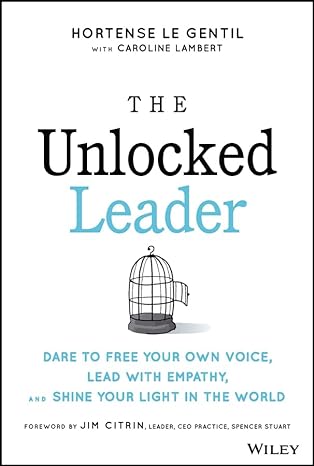
Author: Hortense le Gentil
Article: “On Being More Human in the Age of the Machine”
Sample quote:
The critical leadership skill that’s often missing but no one talks about is not a skills gap. It is not a strategy gap. It is an empathy gap.
Not just feeling what others feel but truly seeing them. Hearing them. Putting yourself in their shoes; without getting stuck there. This is how trust is built. And trust creates engaged teams; teams willing to take risks, make mistakes, and be bold.
Which leads to less turnover and greater ownership. Too many leaders focus on hitting targets yet struggle to build trust. Empathy is not a weakness. It is your superpower. Where does it show up in your leadership?
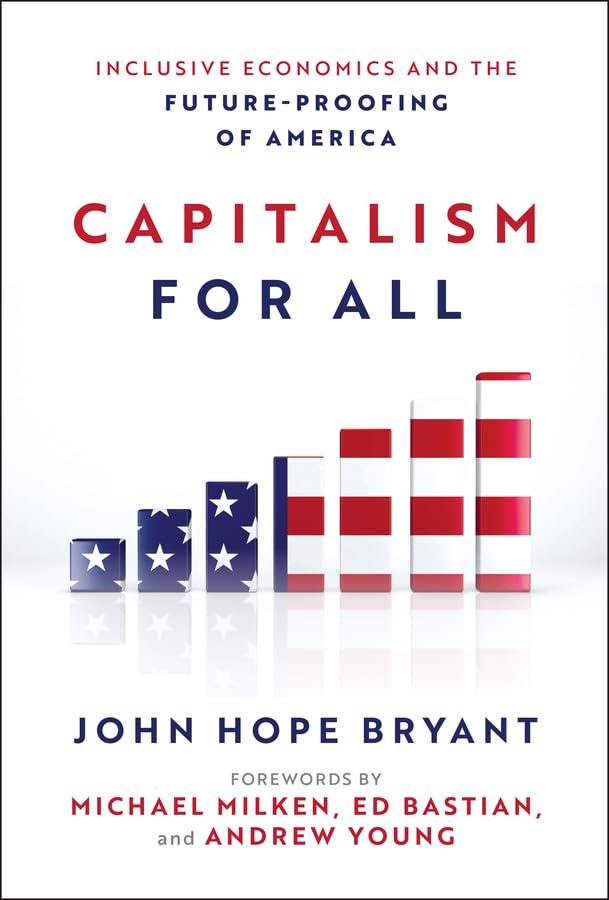
Translators, Healers, Educators, and Bridge Builders
Author: John Hope Bryant
Article: “Leadership for the Third Reconstruction”
Sample quote:
For much of the late twentieth century, leadership was described in terms of strategy, efficiency, execution, and vision. These things still matter. But they are no longer enough. In a world transformed by technological disruption, widening inequality, political fragmentation, and declining trust in institutions, leaders must also be translators, healers, educators, and bridge builders. They must connect performance to purpose, growth to inclusion, and innovation to human dignity.
Today I believe these moments are coalescing into what I call the Third Reconstruction—successor to the post-Civil War era that began turning freedom into citizenship, and to the civil rights movement that won legal equality a century later. This one is economic: the work of moving from civil rights to silver rights, from protest to ownership, and building a capitalism that finally includes everyone.
The Crossroads of Intelligence and Human Experience
Author: Rebecca Shambaugh
Article: “What AI Will Never Replace: 5 Leadership Skills That Matter Most”
Sample quote:
The future of leadership must be a people-centered focus that sits at the crossroads of intelligence and human experience. The most valuable leadership capabilities will increasingly be the ones technology can’t replicate. Today’s leaders must become trust architects, change translators, and culture builders — as well as strategic navigators of ambiguity, and connectors between technology and people.
One trend that I’ve noticed is that organizations focused exclusively on AI implementation without investing equally in leadership capability and workforce readiness tend to experience resistance, disengagement, and failed transformation efforts. To succeed, leaders must create the right conditions for corporate change initiatives around adopting and optimizing AI.
Expertise Developed Over Years of Training
Author: Julia M. Santucci
Article: “Non-Essential: Reclaiming the Value of Public Service”
Sample quote:
When public service is no longer valued by American leaders, the implications are profound. Public servants leverage expertise developed over years of training in service to the American people. As an intelligence analyst, I served my country by providing the President with objective insights about developments in the Middle East so he could best advance U.S. interests there. When experienced analysts depart—or are cowed into silence for fears their objective assessments will be unwelcome—our leaders enter negotiations and even military conflict without the best possible information. We will see similar effects in other sectors of the government as well: when nurses and social workers depart, veterans receive less care; when investigators and prosecutors depart, fraud goes unpunished; when experienced specialists depart the Department of Agriculture, invasive species go undetected.
Moreover, when political leaders devalue public service, it devalues the basis on which our country was founded: a government of the people and by the people. Decisions are made with narrow interests in mind, rather than the public interest. Leaders are no longer accountable to the people they serve. In short, our democracy itself begins to erode.
Emotional Intelligence: Self-Awareness and Beyond
Author: Bruce Rosenstein
Article: “Celebrating 15 Exemplary Leadership Themes of Today and the Future”
Sample quote:
Emotional Intelligence has been omnipresent in the pages of Leader to Leader throughout my tenure, and before. This concept speaks to self-awareness, understanding of and relationships to others, and awareness of the surrounding world; including how it affects ourselves and our organizations.
Daniel Goleman’s book Emotional Intelligence: Why it Can Matter More Than IQ introduced countless people to emotional intelligence in 1995, one year before our publication began. He and Cary Cherniss are co-founders of the Consortium for Research on Emotional Intelligence in Organizations (CREIO). In their 2024 Leader to Leader article, they note that when they co-founded CREIO “more than 25 years ago, there was sparse evidence for the role of EI in optimal leading. Now there is substantial data from studies of hundreds of organizations that reveal a wide range of benefits when leaders, teams, and employees embody EI.”
Four Forces That Have Reshaped Leadership
Author: John Baldoni
Article: “Heart, Integrity, Courage: Leadership Challenges and Life Lessons”
Sample quote:
The first force is globalism. What happens in one corner of the world can affect another corner almost overnight. Leaders need to be vigilant to change and prepare for it.
The second force is that there are more women in positions of senior leadership. When I began my career in the early eighties, it was very much a man’s world. It still is to a degree, but according to Pew Research nearly half the management workforce is comprised of women. Many women are in positions of influence and senior leadership.
The third force is the denigration of truth. Truth has become elastic. Social media has enabled each of us to have a voice and while having a say about what you think is positive, opinion is too often regarded as fact. National leaders worldwide play on this gullibility to promote their own opinions as facts. What is lost is truth as an immutable fact.
The fourth force is artificial intelligence, AI. Organizations worldwide are embracing AI at breakneck speed. AI is eliminating many jobs in multiple sectors. The challenge for leaders is to integrate AI into their operations in ways that improve efficiency and productivity, and also affirm the role that humans play in the design, development, and management of the enterprise.
A Different Route to the Practice of Leadership Development
Author: Deepak Sethi
Article: “Anatomy of A Successful Leadership Development Program”
Sample quote:
While there have been many changes in the practice of leadership development over the 30 years Leader to Leader has been in publication, the importance of leadership development has been a constant. In the 1990s, I had the privilege of designing, sourcing faculty, and helping deliver many leadership development programs, of one week and two week durations for two major corporations, AT&T and Thomson Corporation (now Thomson Reuters) for a number of years each.
Many companies contract with business schools (Harvard Business School and others) or organizations like CCL (Center for Creative Leadership) to design and deliver their leadership programs. At AT&T and Thomson, we followed a different route. My goal was to assemble the brightest minds from a variety of business schools and some renowned independent consultants coupled with senior executives from the company to serve as faculty. I believe this approach can still serve as a model for developing today’s leaders.
Bright Future: Viewpoints from Tomorrow’s Leaders
Do We Really Reward Bold Ideas?
Author: Joel Adu-Brimpong
Article: “The Myth of Safe Novelty: The Familiar Disguised as Innovation”
Sample quote:
We like to think we reward bold ideas: breakthrough medicines, radical designs, daring new visions. Yet some of the best evidence we have on scientific funding tells a quieter story: projects built on the very newest ideas are less likely to be funded than those that build on concepts that have had time to mature. The safest bet, it turns out, is often not the truly radical project but the one that feels new while still resembling that which has succeeded before.
A large analysis of biomedical research mapped how “novel” a paper was by looking at the age of the ideas it combined. The pattern that emerged wasn’t linear; it was an inverted U. Work that drew on ideas roughly 10–25 years old, i.e., new enough to feel current, old enough to feel established, was most likely to receive federal funding. Papers that built on the very newest ideas were funded at lower rates. Over time, the share of funding going to work built on the very latest advances has declined, possibly suggesting that the system has grown more conservative at the edges even as it talks more about “high-risk, high-reward” innovation.
Against Conventional Definitions of What’s Considered Impressive
Author: Sophie Riegel
Article: “Who Taught You What Success Looks Like?”
Sample quote:
My parents are both entrepreneurs. Nobody in my house was pushing a traditional career path or measuring success by fancy titles. And yet somehow, by the time I hit high school, I had absorbed a very specific and conventional definition of impressive. And it had absolutely nothing to do with what my parents modeled.
It came from the culture of school itself. Success was measured in Advanced Placement classes taken, colleges applied to, leadership positions held, and the sheer number of clubs you could fit into your schedule. The unspoken (and spoken) ranking system was clear to everyone who participated in it, as well as the teachers and parents. I played that game hard. And somewhere along the way, I internalized its rules as if they were facts. If you could put it on a resume, it was worthwhile. If adults nodded when you told them about what you were doing, it was impressive.
Changing the Starting Point of Work
Author: Ronith Reddy
Article: “When AI Makes Work Faster, Leaders Must Protect How People Grow”
Sample quote:
Artificial intelligence is changing more than the speed of work. It is changing the starting point. Tasks that once began with uncertainty, research, and a long orientation period can now begin with an informed first draft. For many professionals, especially those early in their careers, the blank page is less intimidating than it once was. AI can help them conceptualize a problem, formulate an initial approach, organize scattered information, and move through ambiguity with greater confidence. In software development, for instance, this might mean using AI to understand an unfamiliar part of a system, outline a debugging approach, or build an initial proof of concept before writing every line from scratch.
This is progress. It reduces friction, lowers barriers to action, and gives more people a meaningful head start. Yet it also raises questions leaders should not ignore. When AI can help people draft, analyze, decide, and build faster, what is a leader’s responsibility toward the people who are still learning? How do leaders embrace acceleration without weakening the experiences through which people develop judgment? And if the next generation skips too much of the struggle that shaped today’s leaders, how will they learn to guide AI, teams, and institutions later on?
From the Front Lines
Constantly Building New Skills and Improving Over Time
Article: “Superteams: Balancing Collaboration With Focused Work”
Sample quote from Ron Friedman, author of Superteams: The Science and Secrets of High-Performing Teams:
Superteams share three key strengths: (1) They get more done by managing their time, energy, and attention more effectively. (2) They don’t just collaborate well. They actively make each other better. And (3) they’re not satisfied with producing great work. They’re constantly building new skills and improving over time.
The encouraging news is that every one of these strengths is learnable, which means that by building the right habits, any team can dramatically improve its performance.
Building Courage for Doing Difficult Things
Article: “Sabbaticals: Focusing on the Important Instead of the Urgent”
Sample quote from DJ DiDonna, author of Big Time Off: The Transformative Power of Sabbaticals and How to Take One:
One of the most surprising aspects of a sabbatical is that they are difficult. Shedding our identity – we spend most of our waking hours at work – creates a vacuum of purpose and how we describe ourselves. However, this unknowable space between leaving and arriving at the next step of our journey is critical for transformation. This blank page goes by many names, from liminal space to fertile emptiness {in the terminology of Transitions author William Bridges}, and it has been an essential part of the rituals and rites of passage for human societies for ages. When we take what seems like a risk to launch into the unknown, it builds courage for doing difficult things.
In order to even have the chance to evolve into something closer to who we want to become, rather than just a small adjustment of who we’ve been, we must have the courage to step into this space. Importantly, the lessons gleaned from this are not ones you can pick up from a book or teacher; they must be experienced directly. This type of knowledge is known as metis, and acts as more of an internship than a textbook. Exploration and experimentation are essential for a transformative sabbatical, as well as personal growth and identity change more generally.